
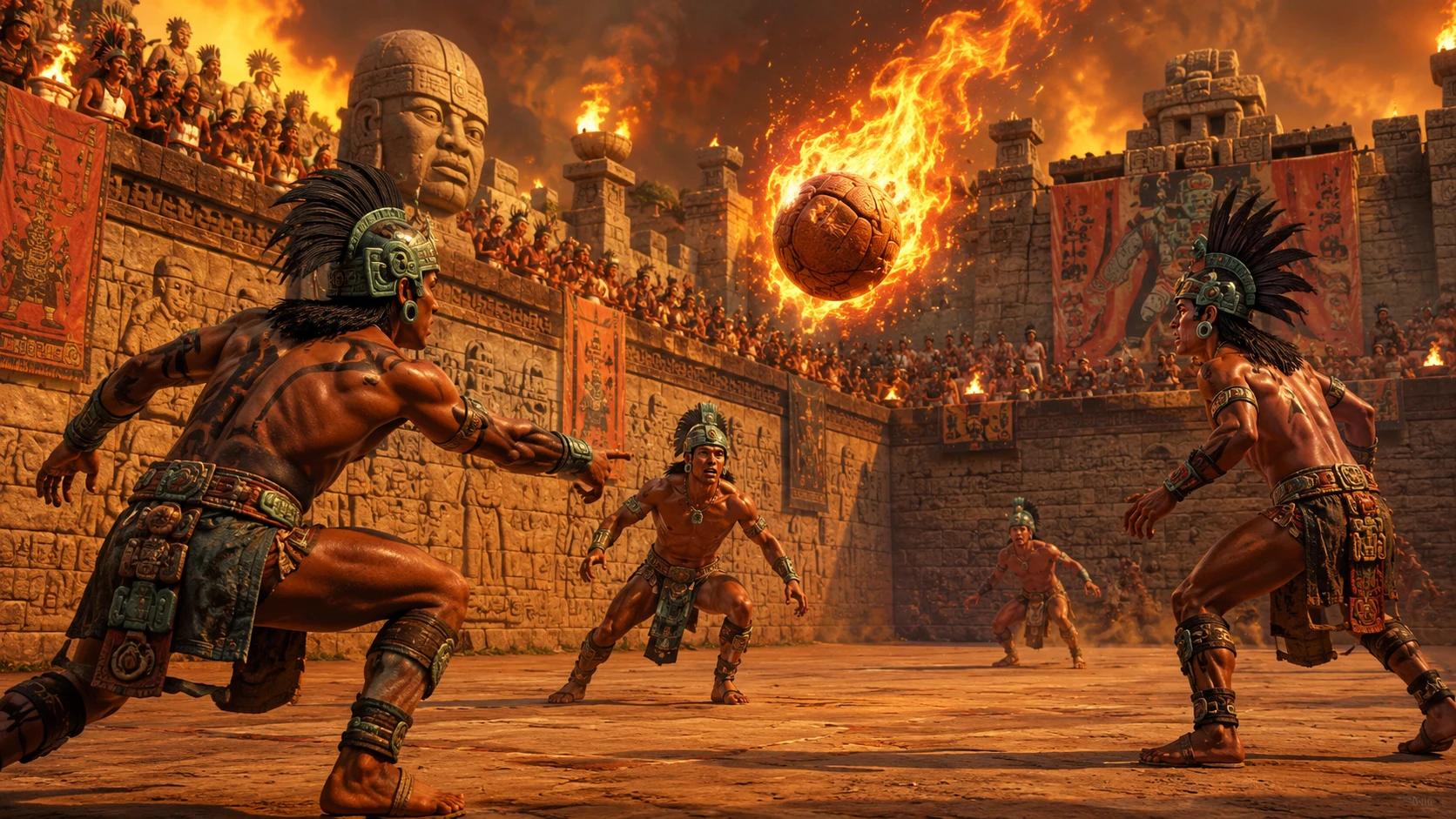
Ancient rubber ball unveils Mesoamerican heritage
The unveiling of a 3,500-year-old rubber ball from Mesoamerica is a remarkable event in archaeological studies. This ball, discovered in Veracruz and now exhibited at the Museum of Anthropology in Mexico City, offers a unique glimpse into the ancient game of ball, a practice that dates back to the Olmec civilization. This discovery sheds light on the technological and cultural achievements of ancient societies in Mexico and highlights how they pioneered the use of natural materials for ritualistic purposes.
What is the significance of the ball discovery?
This ancient rubber ball is a groundbreaking find, shedding light on the early civilizations of Mesoamerica. It was discovered at the archaeological site of El Manatí in Veracruz, a place associated with the Olmec culture. The ball dates back to between 1600 and 1200 BCE, making it one of the oldest known rubber balls. This finds affirm the Olmecs’ mastery over natural materials, particularly their ability to transform latex into durable and elastic objects. The ball offers insights into the cultural and religious significance of the ancient ball game in Olmec society, linking it to agricultural cycles and spiritual beliefs.
How were natural materials utilized in ancient times?
The discovery of the rubber ball illustrates the innovative use of natural materials by Mesoamerican civilizations. The Olmecs developed a process to utilize latex, extracted from local trees, transforming it into a flexible and robust material. This technique was centuries ahead of similar technologies in other parts of the world. By crafting objects like rubber balls, these ancient cultures demonstrated advanced technological understanding and creativity, marking significant progress in Mesoamerican history.
What does the ball tell us about the ancient ball game?
The exhibition of the 3,500-year-old ball provides vital information about the ancient Mesoamerican ball game. Till now, evidence of the game was primarily found in sculptures, reliefs, and ceremonial courts. However, the physical presence of a ball reveals details about its size, shape, and construction techniques. This information allows historians to better understand the game’s role in society, suggesting it was more than sport – it was integral to religious ceremonies and social rituals, reflecting the complex belief systems of the time.
Where can the public view this ball?
The ancient rubber ball is currently on display at the National Museum of Anthropology in Mexico City. This institution is renowned for its extensive collection of archaeological artifacts and serves as a vital cultural hub in Mexico. The exhibition of this ball offers an exceptional opportunity to view an artifact that has survived millennia, providing a tangible connection to the ancient civilizations that flourished in the region. Visitors can explore the broader context of the ball game within the exhibition’s thematic displays, enhancing their understanding of Mesoamerican heritage.
Why is the exhibition significant?
The exhibition not only displays the rubber ball but also provides a comprehensive exploration of Mesoamerican cultural heritage. It contextualizes the ball game by presenting other artifacts, recent archaeological findings, and interactive materials. This multidimensional approach enables visitors to appreciate the game’s significance beyond its athletic elements, recognizing its connections to politics, fertility, and cosmic balance in ancient societies. The exhibition thus elevates the public’s awareness of the complex traditions that have shaped Mexico’s historical and cultural landscape.
How does the discovery impact our understanding of Mesoamerican societies?
This discovery significantly advances our understanding of Mesoamerican societies, particularly regarding their technological abilities and cultural practices. The rubber ball demonstrates the technical prowess required to create such durable items from organic materials, showcasing an advanced knowledge of chemistry and material science among the ancient peoples. Additionally, the ball’s religious and cultural associations highlight the sophisticated social structures and spiritual insights of these civilizations, offering a richer perspective on their historical contributions.
What is the broader cultural impact of the ball game?
The ball game played by ancient Mesoamerican peoples was more than merely a sport; it was a cultural phenomenon with deep-rooted spiritual and social dimensions. The game symbolized cosmic battles and was often linked to rituals that involved political power and societal order. By understanding these elements through the ball’s discovery and exhibition, scholars and the public gain a deeper appreciation for the traditions that have endured through generations, reflecting the enduring legacy of Mesoamerican culture.
What can visitors expect from the exhibition?
Visitors to the Museum of Anthropology can anticipate an engaging and educational experience. Alongside the 3,500-year-old rubber ball, various exhibits and interactive displays offer a detailed look into the history and significance of the Mesoamerican ball game. The presentation weaves together archaeological insights, research findings, and artistic interpretations, providing a comprehensive view of this ancient tradition. This allows attendees to gain an authentic understanding of how such a seemingly simple object encapsulates a profound and multifaceted legacy.
Overall, the exhibition of the ancient rubber ball at the Museum of Anthropology acts as a bridge to the past, illuminating the innovativeness and cultural richness of Mesoamerican civilizations. Such discoveries continue to enrich our knowledge, celebrating the technological and spiritual achievements of ancient societies. The exhibition not only preserves history but also invites contemporary audiences to reflect on the enduring impact of these early societies on modern culture.


