
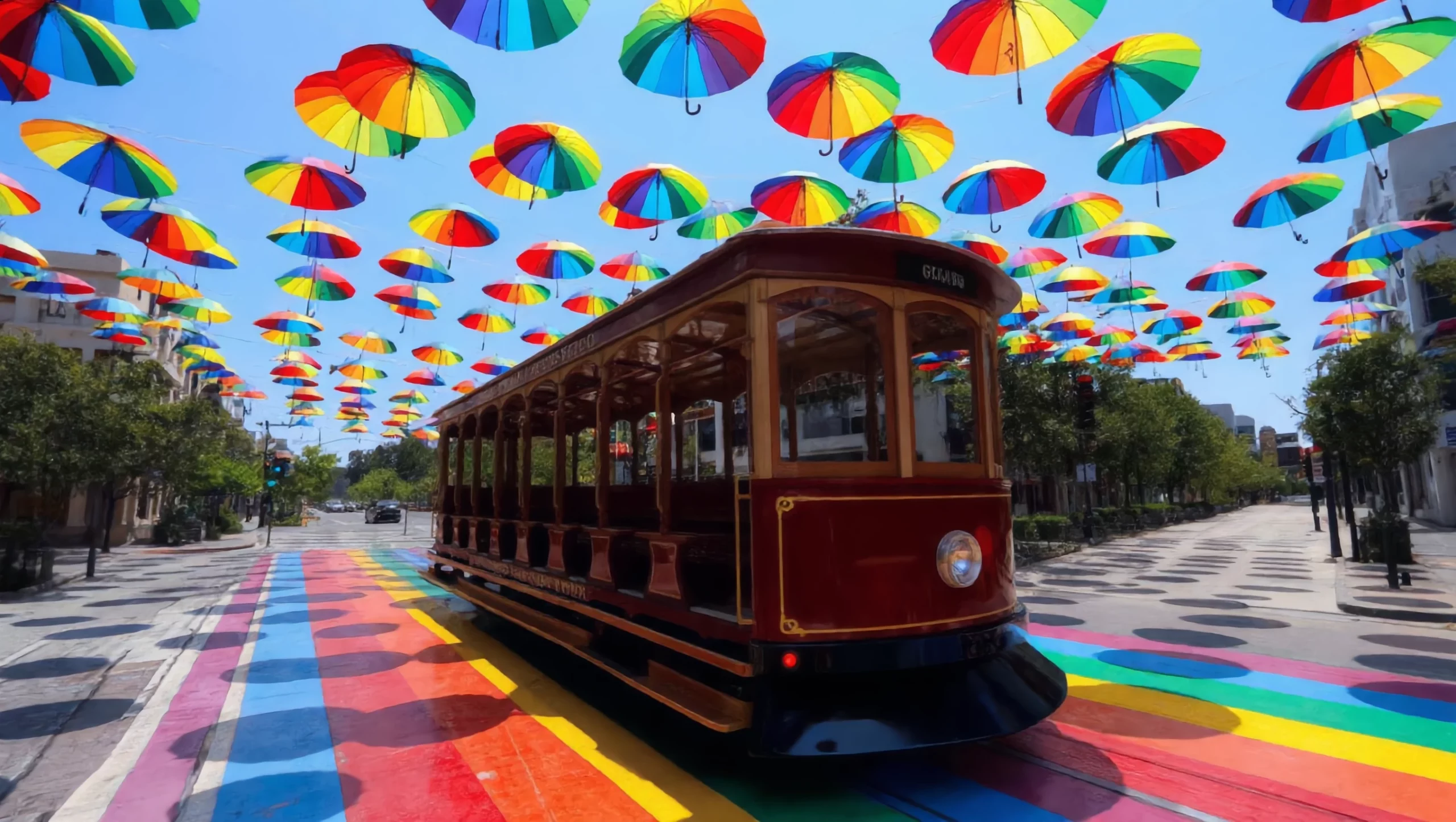
Urban transformation in Mexico City’s Zona Rosa
The Zona Rosa, a key cultural and entertainment hub in Mexico City, is undergoing a significant transformation. Known for its vibrant nightlife and diverse community, this area is set to receive major urban improvements, including public space renovations and urban art installations. With the upcoming FIFA World Cup in 2026, the city government is focused on enhancing this iconic neighborhood’s accessibility and appeal. These initiatives aim at making Zona Rosa more attractive and connected for both locals and tourists.
What is the new tram project?
A new tourist tram is being introduced to offer a unique way to explore Zona Rosa. This tram will cover a circuit of approximately seven kilometers, connecting key sites like the Ángel de la Independencia, the Glorieta de Insurgentes, and the Museo de Cera. While the exact schedule and fees are yet to be announced, the tram is expected to become a popular attraction by providing an alternate way to discover the area’s historical and cultural richness without the usual pressures of time.
How will Zona Rosa become more accessible?
The tram is part of a broader initiative aimed at improving pedestrian infrastructure. This includes upgrading crosswalks, incorporating universal accessibility features, and enhancing lighting. These developments seek to revitalize the pedestrian and tourist experience in Zona Rosa, a neighborhood that sees thousands of visitors every day. Such efforts are crucial as Mexico City anticipates welcoming a global audience and aims to capitalize on the economic and cultural potentials.
What art developments are happening in Zona Rosa?
The area’s artistic landscape is experiencing a boost with the installation and restoration of 29 sculptures distributed across Avenida Chapultepec, Génova, and Amberes. These art pieces form three artistic passageways designed to enrich the visitor experience. For decades, Zona Rosa has been a melting pot of artistic and social expressions. The new installations aim to celebrate and continue this tradition, making the neighborhood a vibrant cultural destination.
What are the economic impacts of these developments?
Zona Rosa’s transformation is expected to stimulate its economic growth, particularly in commerce and tourism. By enhancing the neighborhood’s attractiveness, the city plans to boost local businesses. This comes as Mexico City braces for increased international visitors with the upcoming FIFA World Cup, thus turning the upgrades into timely economic stimulators, aiming to sustain long-term growth and cultural prominence.
Why is this transformation significant?
The ongoing changes in Zona Rosa are significant due to the area’s historical context and cultural symbolism. Known for its cultural booms in the 20th century, it continues to be a benchmark of diversity and urban life in the capital. The introduction of the tram and artistic elements highlights a forward-thinking approach, offering modern comforts without losing the essence that defines the area as an iconic urban landscape.
How does the community view these changes?
The community’s response has been largely positive, as these projects promise improved quality of life and better amenities. Residents and businesses anticipate an increase in foot traffic and economic activity, aligning with the city government’s vision for a sustainable and inclusive urban environment. These interventions are envisioned to support both locals and tourists in experiencing a renewed, vibrant Zona Rosa.
What future developments are expected?
With the tram and art installations underway, further developments might include more pedestrian-friendly projects and enhanced public spaces. As Mexico City positions Zona Rosa for international attention, ongoing innovations will likely focus on maintaining its appeal by introducing cutting-edge infrastructure, diverse events, and expanded cultural programs to keep pace with global standards.
How does this align with global urban trends?
The improvements in Zona Rosa reflect global urban trends emphasizing sustainability and cultural vibrancy. Cities worldwide adopt similar strategies to rejuvenate spaces while preserving unique cultural identities. By balancing modern development with historical preservation, Mexico City stands at the forefront of progressive urban planning, ensuring its places can meet the demands of future generations.
In conclusion, Zona Rosa’s transformation signifies a blend of innovation with cultural preservation. With the introduction of the new tram, enhanced public spaces, and art installations, this neighborhood reaffirms its status as a dynamic urban hub, ready to welcome a wave of global attention while remaining true to its diverse roots.


