
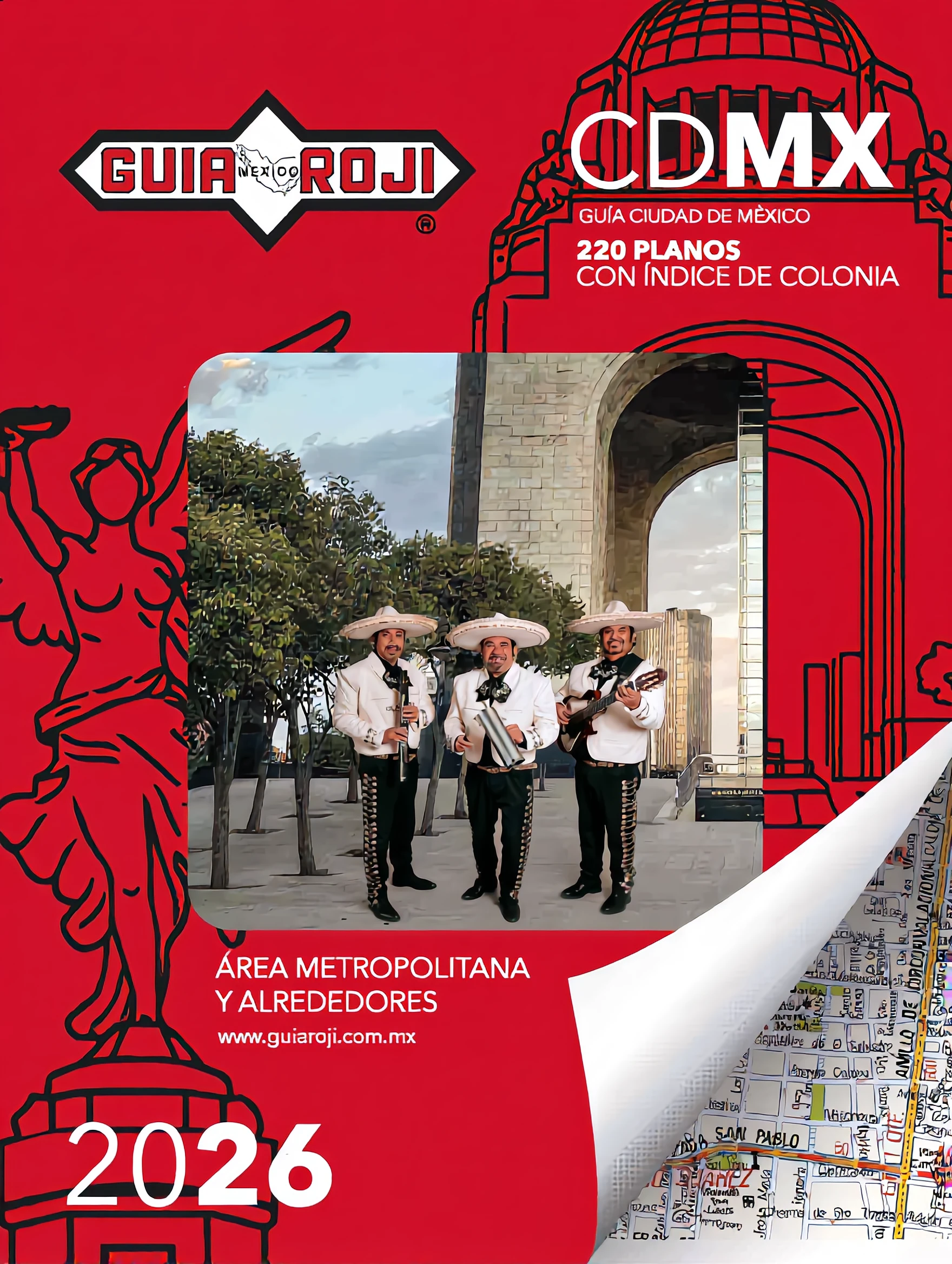
The return of Mexico City’s iconic Guía Roji
The resurgence of Guía Roji, a cherished mapping tool for Mexico City, marks a nostalgic yet innovative return in 2026. In an era dominated by digital maps and GPS navigation, the latest edition of this iconic atlas is drawing attention for its unique approach to city exploration. Its revival brings not only a sense of nostalgia for older generations but also introduces a tactile way to connect with the ever-evolving urban landscape.
What is the Guía Roji and why was it important?
Guía Roji, first created by Joaquín Palacios Roji Lara in 1928, was an indispensable tool for navigating Mexico City. Back then, it was revolutionizing how residents and visitors explored the area. By walking the city himself, Roji Lara meticulously mapped its streets, offering the first comprehensive public map. Over the decades, it reflected the city’s growth, capturing new developments such as the Metro system and expanding road networks. From just one map, it evolved into a collection of 220 diverse maps, illustrating the city’s expanding complexity.
How does the 2026 edition differ?
The 2026 edition of Guía Roji isn’t merely a nostalgic release. It incorporates modern elements like QR codes, enabling users to cross-reference locations digitally. This edition includes updated details about new mobility systems such as the Cablebús, Trolebús, and connections like the Tren Suburbano towards AIFA. Blending traditional paper mapping with contemporary technology, it serves as both a practical tool and a historical document, bridging the gap between the past and today’s digital era.
Why is nostalgia driving its revival?
For many, Guía Roji represents more than just maps; it’s a symbol of an era when navigation required personal engagement with the cityscape. Older editions remind users of major transitions like the 1968 Olympic Metro expansion. The tactile interaction of unfolding a map can be more intuitive than digital routes. It brings a sense of personal exploration absent in today’s screen-dominated navigation, evoking a desire to reconnect with that tangible past.
Is Guía Roji competing with digital maps?
Rather than competing directly with digital alternatives like Google Maps or Waze, Guía Roji positions itself as a supplementary tool. It offers reliability without dependence on internet connectivity or battery life. In environments where digital tools might falter, a physical map remains dependable. Its latest iteration suggests a complementary experience, allowing users to enjoy a hybrid approach to navigation that values both digital convenience and analog reliability.
How does it reflect Mexico City’s evolution?
Each edition of Guía Roji tells the story of Mexico City’s development. Older maps depicted a simpler metropolis, while current editions reveal layers of urbanization, showing historic areas transformed or integrated into the metropolitan sprawl. The atlas is a testament to the city’s adaptability and persistent growth, reflecting changes in infrastructure and territory. This constant update provides a unique urban chronicle difficult to perceive through digital maps alone.
Why are younger generations interested?
For younger users, Guía Roji is a novel encounter with physical navigation, contrasting with their tech-centric upbringing. It facilitates an understanding of physical geography, spatial awareness, and even critical thinking when plotting routes. The hands-on experience offers a break from virtual navigation, introducing the challenge and thrill of self-guided city exploration. This tangible experience can enhance spatial learning in ways digital maps may not.
What makes using a physical map satisfying?
The use of a physical map like Guía Roji encourages a complete mental mapping of the city, rather than just following a digital line. Unfolding a map provides a broader perspective, showcasing often overlooked connections between neighborhoods. This can lead to unexpected discoveries and a deeper comprehension of urban dynamics. The physical engagement with a map can be rewarding in itself, offering an exploratory pleasure hard to replicate digitally.
How does Guía Roji signify a lifestyle change?
The reissue of Guía Roji suggests a shift in how people interact with their surroundings, promoting mindfulness in travel and daily commutes. It encourages users to enjoy the journey, not just the destination, advocating for a slower, more immersive travel experience. By promoting this hands-on approach, Guía Roji fosters a richer understanding and appreciation of Mexico City’s fabric, inspiring users to engage with their environment more thoughtfully.
The return of Guía Roji highlights an enduring desire for authenticity and simplicity in an increasingly digital world. By bridging the gap between past mapping practices and current technological advances, it reintroduces an essential tool for exploring one of the world’s most vibrant cities. Its revival is not just about navigating streets but also about rediscovering a city in a personal and meaningful way.


