
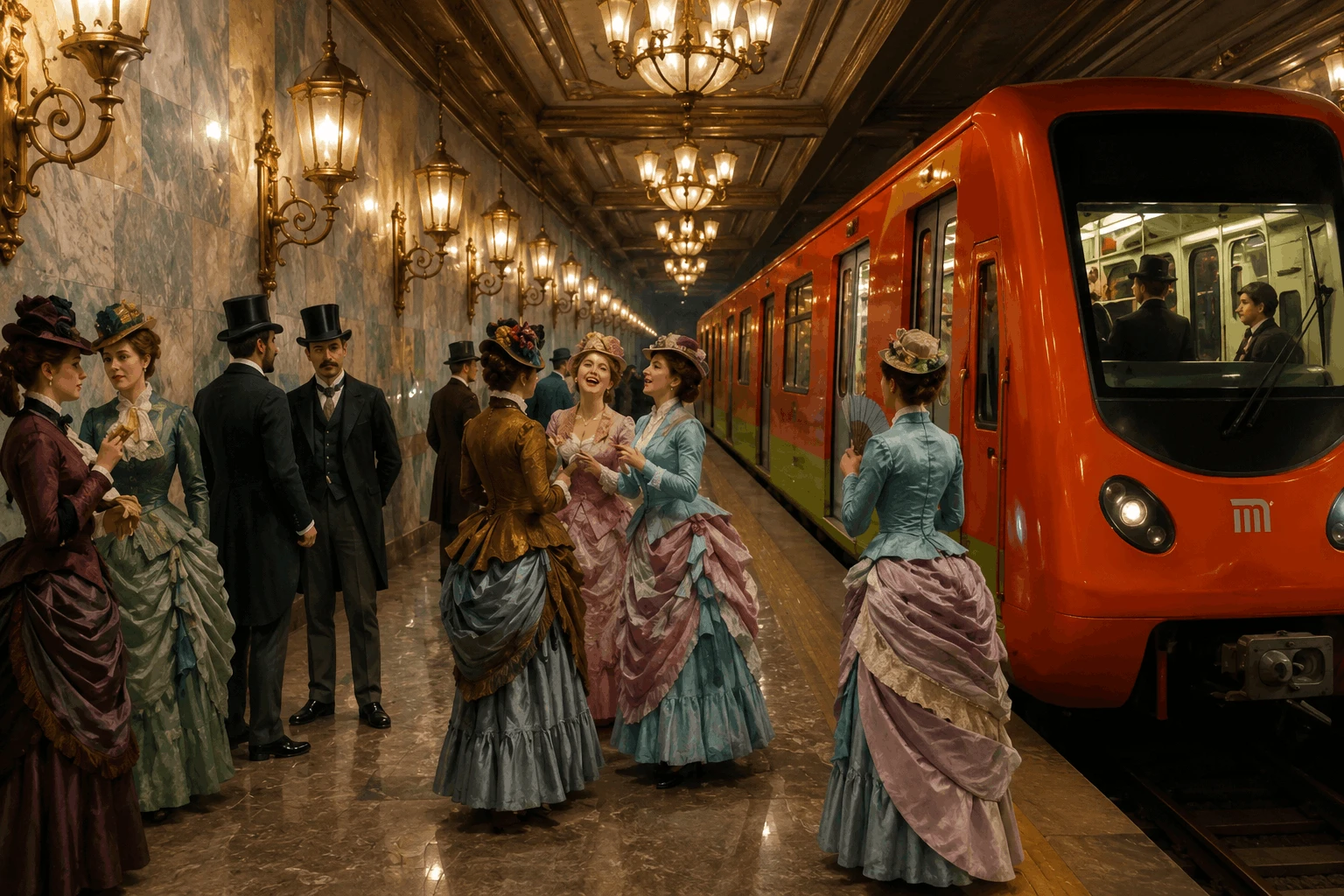
Metro Hidalgo’s unexpected viral cultural event
The recent renovation of Mexico City’s Metro Hidalgo station has unexpectedly transformed into a cultural sensation, sparking a nationwide conversation full of creativity and humor. Initially, the station’s makeover aimed to prepare for the upcoming 2026 FIFA World Cup. With its classical chandeliers and decorative elements, it quickly captured the public’s attention. Social media users have been comparing the revamped station to European palaces and historical movie sets. This unexpected response highlights how urban changes can inspire cultural phenomena in a digitally connected society.
How did Metro Hidalgo become a viral sensation?
The Metro Hidalgo station’s transformation into a cultural phenomenon began with its recent renovation. As part of improvements for the 2026 FIFA World Cup, the station received classical decorations. This included chandeliers and ornamental finishes, drawing parallels to European palaces. Social media users quickly took to platforms like TikTok and Instagram, creating memes and videos. These compared the station to historical scenes, showcasing its elaborate makeover. This viral activity represents how urban redevelopment can capture public imagination in a connected world.
What sparked the interest in wearing historical clothing?
A unique internet-driven initiative gained traction after the Metro Hidalgo renovation. Various social media posts encouraged people to visit the station dressed in 16th-century-style clothing. This spontaneous movement aimed to enhance the station’s aesthetic appeal by resembling a historical setting. Capes, long dresses, corsets, and hats are among the suggested attire. The idea quickly caught on, showing the power of community-driven events in forming new cultural trends. This phenomenon emphasizes how online interactions can lead to real-world experiences.
When and where is the event taking place?
The event at Metro Hidalgo is set for Thursday, June 11, at the Hidalgo station on Line 2 of the Mexico City Metro. Social media platforms have circulated this information widely, inviting the public to participate in this unique cultural reenactment. With the station’s classical decor, the aim is to create an environment resembling historical times. This organized gathering demonstrates how digital culture can manifest as engaging public events, encouraging collective participation.
How did the renovation tie into larger city plans?
The Metro Hidalgo’s makeover is part of broader city improvements linked to hosting the 2026 FIFA World Cup. The renovations aimed to upgrade various strategic areas, including the historically significant Metro line. The inclusion of opulent chandeliers and classic decor added an unexpected layer of cultural intrigue. While this aligned with infrastructural goals, it also sparked a broader dialogue on urban aesthetics. This convergence of renovation and public response illustrates the social impact of urban planning.
What does this say about digital culture in Mexico City?
Mexico City has a rich tradition of transforming digital phenomena into real-world experiences. The Metro Hidalgo event follows this pattern, turning a virtual idea into a tangible gathering. This culture showcases how humor and creativity serve as tools for community engagement. Through spontaneous online discussions, residents now regularly shape public life and urban culture. This ability to translate memes into societal events highlights Mexico City’s digital vibrancy and adaptability.
What are the broader implications for cultural participation?
The spontaneous gathering at Metro Hidalgo underscores broader trends in cultural participation. This event exemplifies how digital platforms facilitate collective creativity and cultural exchange beyond traditional boundaries. By inviting the public to recreate historical settings, it also encourages exploration of identity and history. In doing so, it nurtures a blend of humor and historical appreciation, enhancing cultural literacy. This phenomenon reflects a growing public appetite for interactive cultural experiences fostered through digital communities.
Why is the Metro Hidalgo event significant?
The significance of the Metro Hidalgo event lies in its grassroots origin and widespread appeal. As an organically-formed initiative, it shows the power of community mobilization without institutional backing. The event marks a milestone in digital cultural expression, drawing interest from diverse groups. Its thematic uniqueness—melding urban life with historical reenactment—enriches cultural discourse. Moreover, it reinforces the notion that public spaces can be repurposed for creative expression, fostering an inclusive cultural landscape.
What can we expect from this cultural phenomenon in the future?
The Metro Hidalgo phenomenon suggests promising future directions for cultural engagement in urban settings. As cities continue to evolve, they offer vast potential for similar events, blending digital culture with physical spaces. This emerging trend encourages cities to integrate public art and cultural initiatives more fully. By fostering interactions between locales and their communities, such movements can lead to enriched urban experiences. As we witness this shift, the future of urban cultural participation appears innovative and dynamic.
In conclusion, the transformation of Metropolitan Hidalgo into a cultural event underlines the power of digital culture in reshaping public spaces. This phenomenon highlights the potential for urban areas to host community-driven cultural experiences. As digital interactions continue to influence real-world environments, the culture of Mexico City exemplifies an adaptive, vibrant model for future urban cultural dynamics.


