
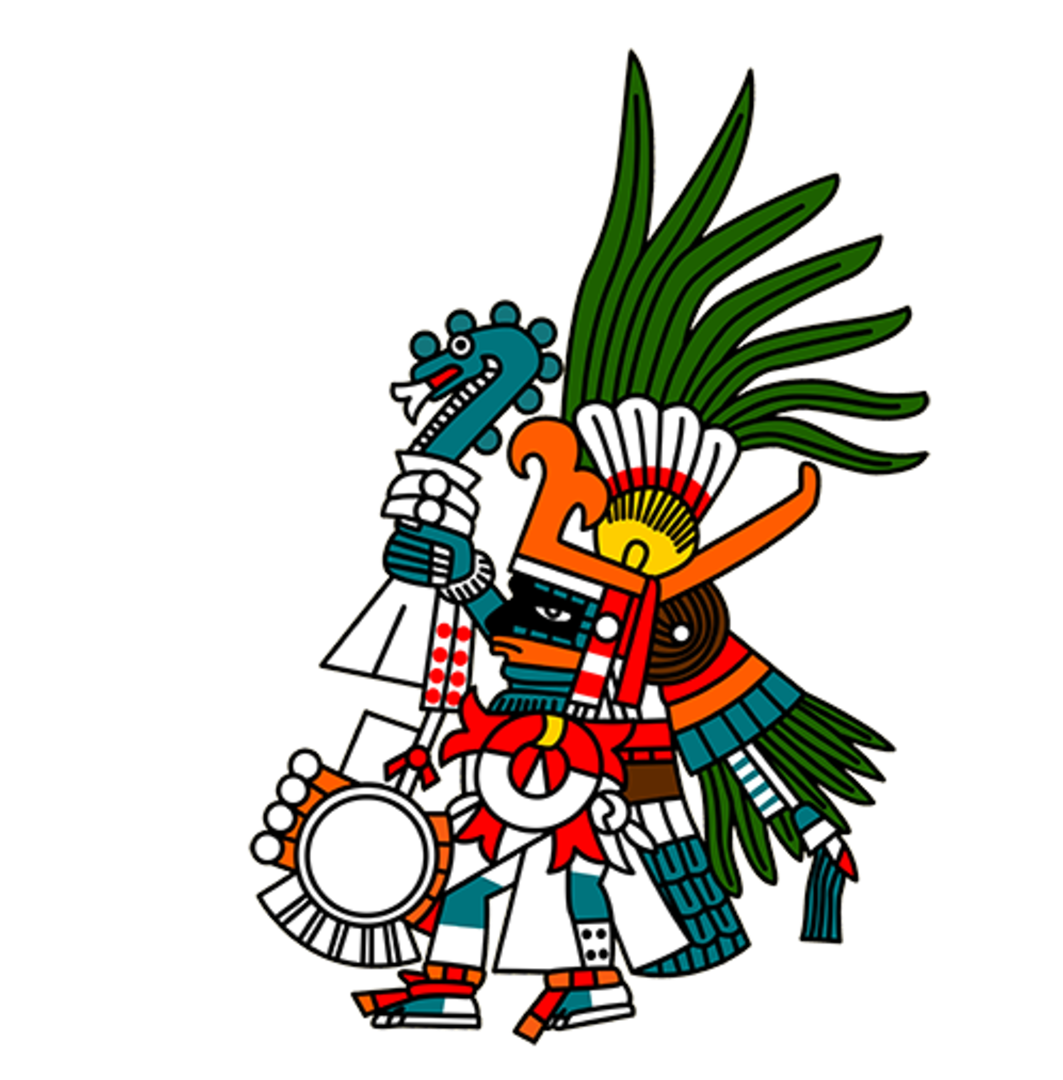
Exploring Huitzilopochtli’s presence on Mexico’s flag
The emblem on the Mexican flag is a powerful symbol that extends beyond national identity. Featuring an eagle, cactus, and serpent, this image holds significant ties to Huitzilopochtli, the primary deity of the Mexica people. This emblem tells a story of migration, war, and the founding of Tenochtitlan, with deep-rooted connections to Mexica mythology and history. Understanding this symbolism offers insight into how a centuries-old tale became central to the identity of modern Mexico.
What is Huitzilopochtli’s connection to the Mexican flag?
Huitzilopochtli, a major deity for the Mexica, plays a crucial role in the symbolism of the Mexican flag. According to Mexica lore, Huitzilopochtli guided his people from Aztlán to Tenochtitlan. The sight of an eagle perched on a cactus was the divine signal for their settlement. Founded in 1325 amidst Lake Texcoco, Tenochtitlan became the core of the Mexica empire. This narrative highlights how the emblem’s elements go beyond national symbolism to represent a divine journey and an ancient heritage intertwined with modern Mexican identity.
What does the eagle represent in Mexica tradition?
The eagle in Mexica tradition is deeply significant and not merely a bird of prey. It symbolizes the sun and Huitzilopochtli himself, representing solar and martial power. This association was reinforced by the eagle’s soaring ability, paralleling the sun’s daily journey across the sky. Such symbolism is evident in the Teocalli of the Sacred War, a Mexica monument. The monument depicts the eagle as integral to the founding myth of Tenochtitlan and linked to concepts of war, sacrifice, and cosmic order, embodying the Mexica worldview.
Why is the cactus important in the emblem?
The cactus (nopal) holds essential symbolism in the Mexica founding myth of Tenochtitlan. As per tradition, the eagle’s perch on the nopal confirmed the site for establishing Tenochtitlan. The nopal also symbolizes the earth and cosmic axis in Mesoamerican thought, connecting different universe levels. Through this, the eagle and nopal formed an inseparable image linked to Tenochtitlan, long before Mexican independence. Its significance endures as part of the modern national emblem, uniting ancient cultural threads with contemporary identity.
How does the serpent fit into the emblem’s history?
The serpent is a well-recognized yet complex element of the emblem. Historically, its inclusion alongside the eagle varied. In some depictions, it relates to the eagle, while others differ. For the Mexica, the serpent had multiple associations, including earth, water, and the underworld, and was seen as powerful and venomous. In the founding myth, it symbolized a defeated enemy or conquered land, illustrating its layered symbolism. The serpent’s depiction in the emblem is a transformative synthesis of evolving symbols into a coherent national icon.
How did the emblem evolve post-Conquest?
Following the Spanish Conquest, the eagle and nopal motif persisted, assuming new relevance during Mexico’s Independence. Leaders of the movement, like José María Morelos, embraced this symbol to forge a national identity inclusive of pre-Columbian elements. The Zitácuaro Junta in 1811, and later insurgent flags, incorporated it. In 1821, an official decree formalized the flag with a green, white, and red tricolor and the emblem of the crowned eagle on a nopal, aligning with Mexico’s emerging independent state identity.
When was the current version of the emblem established?
The current version of the national emblem was established during Luis Echeverría’s presidency in 1973. This design features the golden eagle in profile, wings spread, clutching a rattlesnake atop a cactus emerging from water. Oak and laurel branches complete the emblem, encapsulating the nation’s spirit. It reflects historical evolution with adjustments by President Venustiano Carranza in 1916 and Porfirio Díaz in 1892, each contributing alterations that collectively mirror Mexico’s political and cultural journey.
What is the enduring significance of Huitzilopochtli on the flag?
While the Mexican flag’s emblem isn’t a direct depiction of Huitzilopochtli, its historical and symbolic connections to the deity are profound. The eagle’s association with Huitzilopochtli and the sun in Mexica cosmology laid foundations for the emblem’s centrality in Mexican identity. It amalgamates layers of history, from Aztlán’s migration, Tenochtitlan’s founding, Mexica cosmology, and Independence, to modern statecraft. This multi-faceted emblem emphasizes the collective cultural memory shaping Mexico’s national consciousness.
Conclusion: The emblem’s legacy in Mexico
The Mexican flag’s emblem is much more than a visual icon; it is a historical narrative in itself. From its roots in Mexica mythology to its modern representation, it encapsulates the essence of Mexican history. This emblem tells a story bridging ancient myths and modern identity, symbolizing the endurance of cultural heritage. Its presence on the flag serves as a powerful reminder of Mexico’s vibrant past, diverse culture, and unified identity. Thus, the emblem continues to be a key element of national pride and continuity.


