
Escamoles: History, Tradition, and the Flavors of Mexican Earth
In Mexican cuisine, there are ingredients that tell a story long before they reach the plate. Escamoles are one of them. Small, delicate, and seemingly simple, these ant eggs, larvae, and pupae are part of a culinary tradition that dates back to pre-Hispanic times and remains alive today, especially in the central regions of Mexico.
Today, escamoles are considered an exceptional gastronomic product. Their delicate texture and subtle flavor have made them a prized ingredient both in traditional cuisine and in contemporary restaurants. But behind their luxurious character lies a much deeper story: that of an ancestral relationship between Mexican communities and the resources provided by their land.
A Food with Pre-Hispanic Roots
The word escamoles comes from the Nahuatl azcamolli: azcatl, ant, and molli, stew or prepared delicacy. The name refers to their origin and to the way these products were incorporated into the diet.
Their consumption is part of Mexico’s ancient tradition of entomophagy. Long before the arrival of the Spanish, Mesoamerican peoples made use of an extraordinary diversity of insects as a source of food. Grasshoppers, maguey worms, jumiles, ants, and escamoles were part of a diet closely connected to the natural environment. Mexico’s Ministry of Culture specifically recognizes ant eggs, or escamoles, among the foods consumed in pre-Hispanic Mexico.
Scientific research suggests that the harvesting of escamoles may have begun as early as the pre-agricultural period, and that this practice has survived to the present day. Their importance became such that there are references to songs and dances associated with these insects within Nahuatl culture.
Thus, eating escamoles is not simply about tasting an exotic ingredient. It means participating, even if only for a moment, in a culinary tradition that has endured for centuries.
What Exactly Are Escamoles?
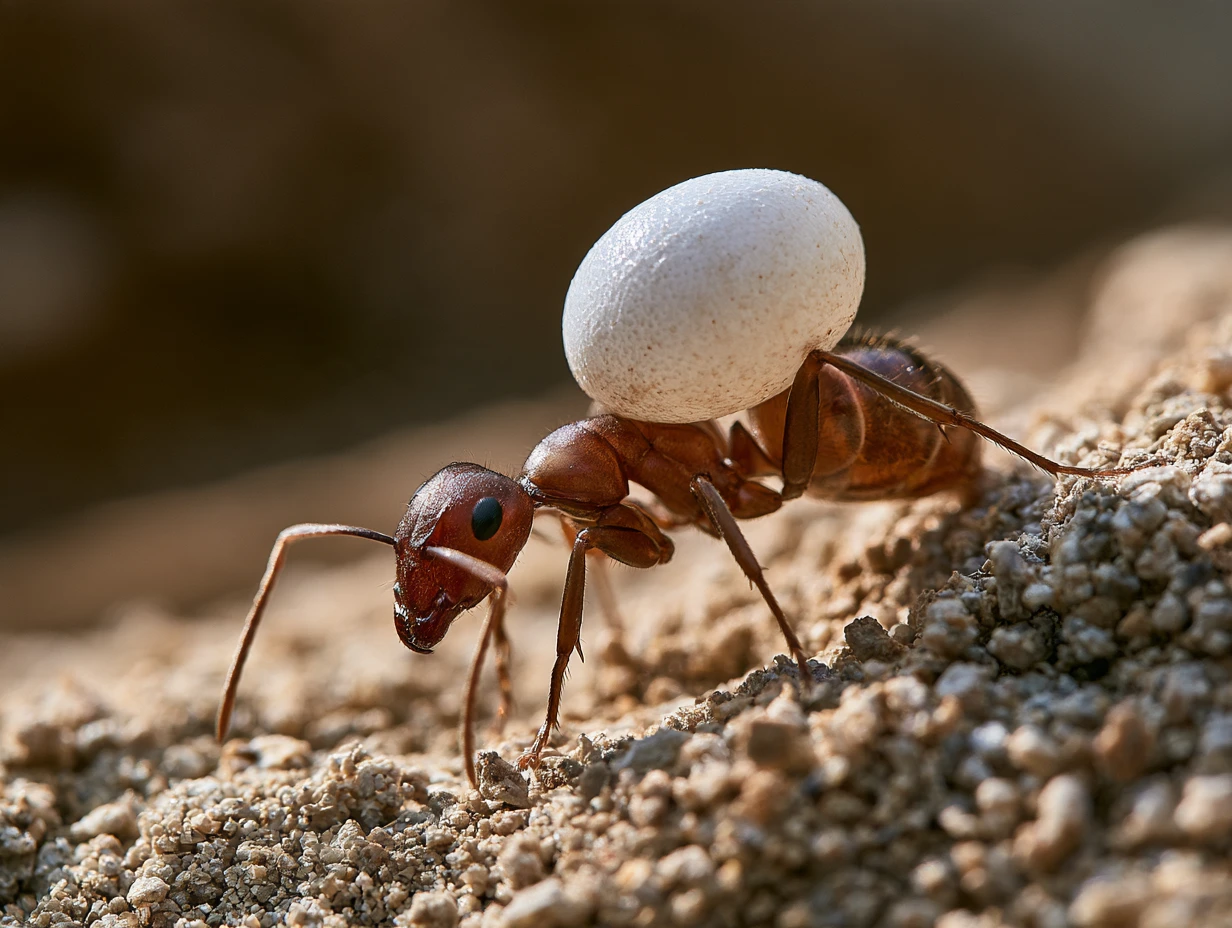
Escamoles are primarily the immature forms of certain ant species belonging to the genus Liometopum. The most extensively studied species is Liometopum apiculatum, known as the escamolera ant or güijera ant. Some gastronomic sources also include Liometopum occidentale among the species harvested.
These ants build their colonies underground, and the escamoles are found inside the nests, where worker ants care for and feed the larvae and pupae. The nests can be highly complex and may contain large populations.
Their harvesting is seasonal. Studies of Liometopum apiculatum place the main harvesting season between late February and the first weeks of May, depending on weather conditions and the arrival of the rains.
This seasonality is one of the reasons escamoles are such a special product: they are not available year-round, and obtaining them depends directly on the species’ natural cycles.
The Work of the Escamolero
Behind every dish of escamoles lies knowledge passed down through generations.
Finding an ant nest is not simply a matter of digging into the ground. Traditional harvesters understand the behavior of the ants, the places where they tend to establish their colonies, and the characteristics of the terrain that may indicate the presence of a nest.
Research carried out in the Potosí-Zacatecas Highlands shows that the habitat and type of substrate where a nest is located influence harvesting yields.
Furthermore, the way escamoles are harvested is essential to the survival of the colony. A study published in Acta Zoológica Mexicana warns that growing commercial demand, combined with inappropriate harvesting practices, may threaten populations of the escamolera ant. The researchers also point out that knowledge about the species remains limited and that conservation depends to a significant extent on responsible harvesting practices.
For this reason, the tradition of escamoles is about more than gastronomy. It is also about ecological knowledge, rural communities, and a careful relationship with the land.
From Traditional Food to Gourmet Ingredient
For centuries, escamoles were part of the diet of communities in different regions of Mexico. Over time, their seasonality, difficult harvesting process, and delicate texture helped transform them into a product regarded as a luxury.
Mexico’s Ministry of Agriculture and Rural Development notes that escamoles are particularly appreciated in Hidalgo, where they are traditionally used in dishes such as tamales, sauces, broths, and other regional recipes.
Larousse Cocina documents traditional preparations such as escamoles cooked in mixiote, served with turkey eggs, or prepared as ascamulli, a dish of escamoles in a chile sauce with nopales and epazote.
In other words, there is no single way to eat them. As with so many ingredients in Mexican cuisine, escamoles take on different identities depending on the region, the season, and family tradition.
What Do They Taste Like?
Perhaps one of the biggest surprises for someone tasting escamoles for the first time is that their flavor is not necessarily intense.
Their texture is soft and delicate, and they are traditionally cooked with ingredients that complement their flavor, such as butter, epazote, chile, or aromatic herbs. In contemporary cuisine, they may appear in tacos, tostadas, tortillas, quesadillas, or as an accompaniment to other dishes.
This versatility helps explain how they have moved from rural kitchens to the tables of fine-dining restaurants.
But reducing them to the label of “Mexican caviar” would be to miss the point. Escamoles have an identity and history of their own, one that does not depend on comparison with any other food.
A Living Tradition
Mexican cuisine is recognized precisely for its ability to preserve ancient techniques and ingredients while transforming and adapting them to new contexts.
Edible insects are a particularly clear example. According to UNAM, the diet of the inhabitants of pre-Hispanic Mexico made use of a wide variety of animal and plant resources, including escamoles, grasshoppers, maguey worms, ahuahutle, axayacatl, and jumiles. Part of this tradition survived the profound changes brought about by the Spanish Conquest and continues to be present in Mexican communities and kitchens.
Today, escamoles can be found both in traditional preparations and in gastronomic creations that seek to reinterpret ancestral ingredients. Their presence in contemporary cuisine demonstrates that innovation does not always mean inventing something new: sometimes it means looking at ancient ingredients from a different perspective.
The Future of Escamoles
The growing gastronomic interest in escamoles also raises an important question: how can this tradition be maintained without endangering the resource that makes it possible?
The answer lies in recognizing the knowledge of those who have traditionally harvested them and promoting harvesting practices that allow the colonies to continue reproducing. Scientific research has warned that commercial demand and irresponsible harvesting can negatively affect populations of escamolera ants.
Preserving escamoles, therefore, does not simply mean preserving a recipe. It means protecting an ecosystem, rural knowledge, and a culinary practice that forms part of Mexico’s gastronomic heritage.
Much More Than an Ingredient
Escamoles are small, but the story they carry is enormous.
They are a product of the land, of a specific season, and of the knowledge of those who know where and when to find them. They are part of a pre-Hispanic culinary tradition that has survived through the centuries and today occupies a unique place between traditional cuisine and contemporary gastronomy.
To taste escamoles is, in a way, to taste a part of Mexico’s history: a story that begins underground, in the ant nests, continues in the hands of the harvesters, and ultimately reaches the table.
And perhaps that is where their true value lies. Not only in their flavor or rarity, but in everything they represent: land, tradition, knowledge, and culinary memory.


