
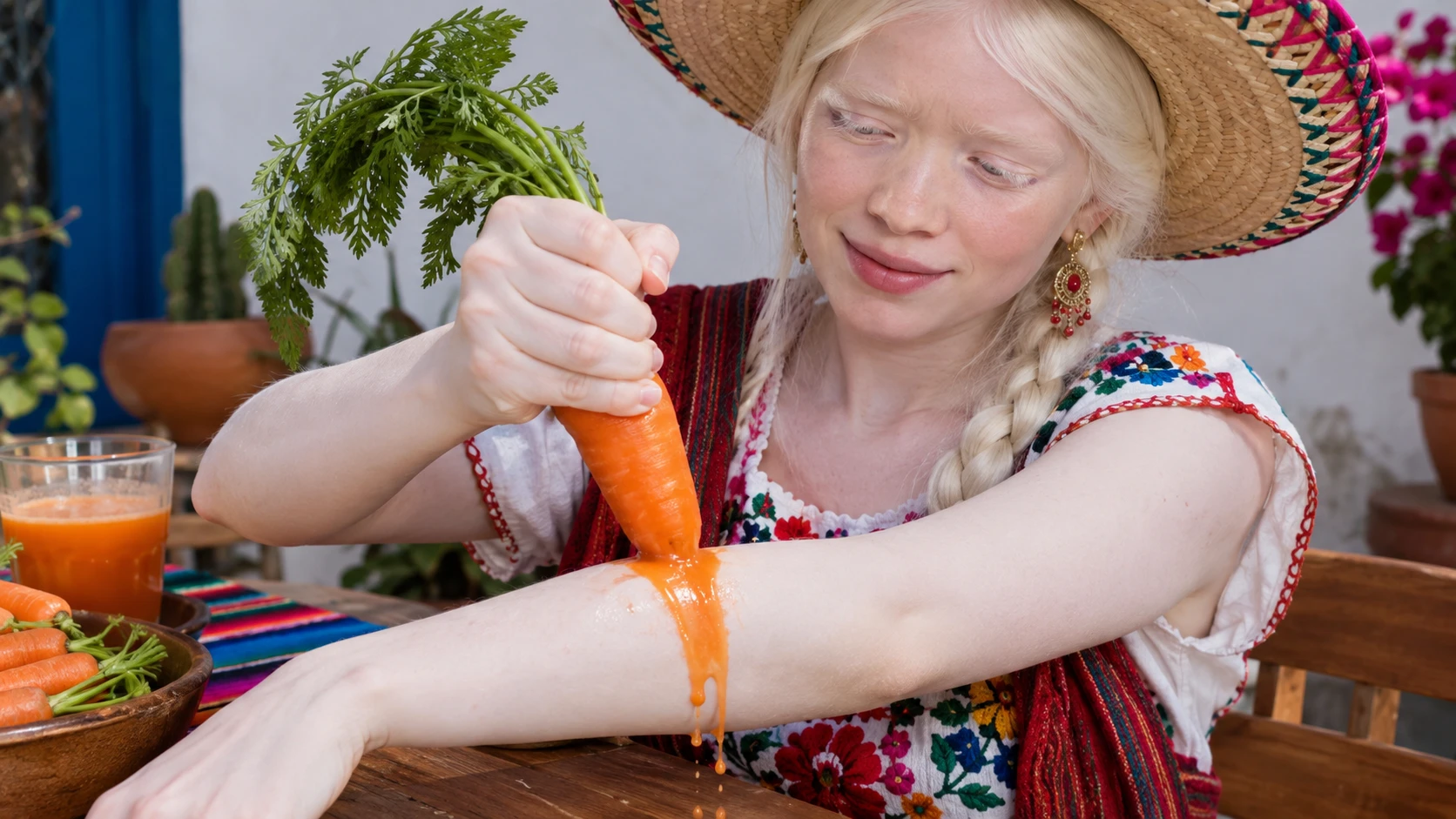
Mexican student creates carrot-based sunscreen
In an innovative leap from student research to potential commercial application, Joanna Conde Audey from the Benemérita Universidad Autónoma de Puebla (BUAP) has developed a unique sunscreen. This carrot-based formulation combines zinc oxide with beta-carotene extracted from carrots, targeting sensitive skin and individuals with albinism. Her work is a pioneering step in cosmetic formulations that harness natural ingredients, showcasing a new dimension of photoprotection with possibilities for patenting and commercialization.
What makes this sunscreen unique?
The distinctive aspect of this sunscreen is its base ingredient: beta-carotene derived from carrots. Joanna Conde Audey, a student at BUAP’s Faculty of Chemical Sciences, successfully integrated this compound with zinc oxide. Beta-carotene is known for its photoprotective properties, anti-inflammatory, and antibacterial effects. Therefore, this product offers a potent defense against UV rays while being gentle on sensitive skin. The development stages also involved an in-depth study of beta-carotene’s properties, ensuring its safety and effectiveness.
Why is it ideal for sensitive skin?
The formulation specifically targets individuals with skin susceptibilities. During trials, no adverse reactions were reported among users with sensitive or very fair skin, including those with albinism. This success is attributed to the careful selection of ingredients that minimize irritation. The natural origin of beta-carotene combined with zinc oxide, a well-studied mineral in sun protection, offers a double layer of skin defense. This focus on hypoallergenic properties makes it an appealing alternative for people often unable to use conventional sunscreens.
How is this sunscreen applied?
Unlike typical creams or sprays, this sunscreen is presented as a nanopowder. This innovative format allows for easy absorption and even application. Users are advised only one application per day, contrasting with the usual recommendation to reapply sunscreen every couple of hours. The nanopowder form extends the product’s durability, offering long-lasting protection. Such advancements suggest a move towards more convenient and efficient sunscreen solutions.
Environmental benefits of the product
The environmental consciousness behind the product’s development is noteworthy. It reduces harmful environmental impacts often associated with conventional sunscreens, which can contain chemicals harmful to marine life. With a base of natural ingredients and a unique formulation, this product aims to be both eco-friendly and sustainable. This aligns with a broader movement towards green chemistry in product formulations.
Potential for commercial development
The project originates as part of Joanna Conde Audey’s academic work, showcasing the application of theoretical chemical knowledge to practical challenges. Efforts are underway to secure a patent, emphasizing a move from academic circles to industry. Should this succeed, the sunscreen could become a cornerstone of a new wave of innovative, nature-based photoprotective solutions. The patent application process reflects a possible pathway from university research labs to the global market.
Research support and collaboration
The project benefited immensely from collaboration with Professor José Albino Moreno, who provided essential guidance. Their combined work emphasizes the importance of mentorship and collaboration in academic research and innovation. This research underlines how combining diverse scientific expertise leads to developing practical solutions addressing specific consumer needs.
Impact on Mexican scientific innovation
This development is not just a personal achievement but a testament to the potential of Mexican scientific innovation. Utilizing a common vegetable to create an advanced cosmetic product represents a creative link between traditional knowledge and modern technology. The potential patent will further cement this transformation, underlining Mexico’s role in pioneering new scientific applications.
Future prospects for the sunscreen
The future of this sunscreen is promising. With plans for patenting and potential commercialization, there is significant interest in this novel formulation both in the cosmetic industry and among consumers seeking eco-conscious and effective skin protection solutions. This innovation sets a precedent for similar projects in the realm of natural ingredient-based skincare, paving the way for further research and development.
Overall, this carrot-based sunscreen project highlights the fusion of innovation, research, and environmental responsibility. It stands as a beacon of future-forward thinking in skincare, aligning scientific rigor with sustainability.


