
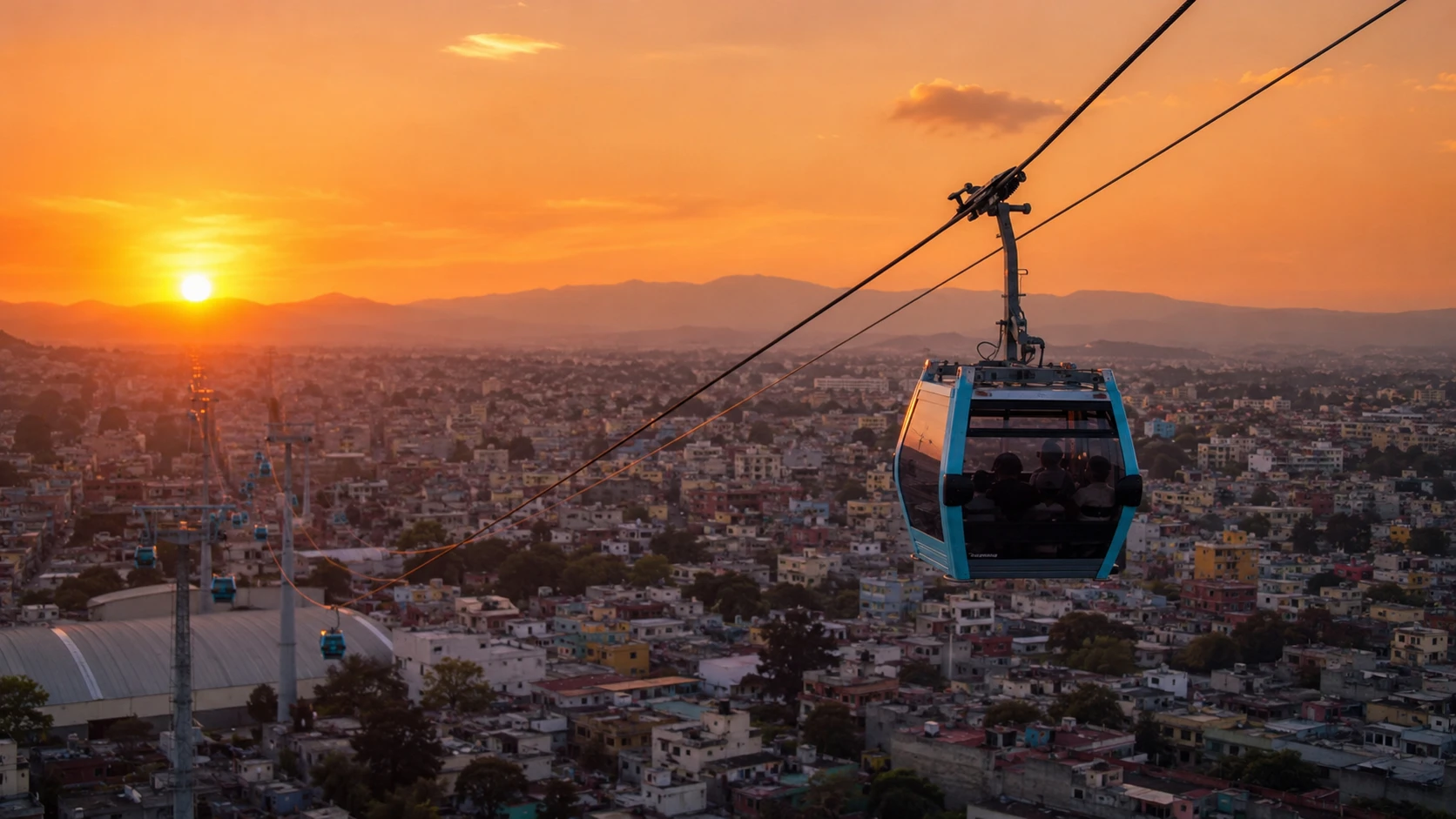
Mexico City launches Cablebús Line 5 project
Mexico City is embarking on a transformative project with the construction of Cablebús Line 5. This ambitious initiative is not just about a new aerial route but also aims to become a cornerstone of international urban transit systems. Set to stretch approximately 15.4 kilometers, this line will become the longest urban cable car globally. Its purpose is to connect two key areas and facilitate access to various transit lines, thereby significantly reducing local commuting challenges and ensuring efficient travel across different city zones.
How will Cablebús Line 5 change daily commutes?
Cablebús Line 5 will revolutionize daily commutes for Mexico City residents by connecting Magdalena Contreras and Álvaro Obregón with Mixcoac. Stretching over 15.4 kilometers, this line will integrate with Metro Lines 7 and 12 at Mixcoac, offering a cohesive transit system. With a total of 12 strategically placed stations, the new route will cut commute times drastically. Estimated to take around 40 minutes to traverse, compared to current journeys, it offers substantial relief from typical traffic congestion, impacting thousands of daily commuters positively.
What are the technical specifications of the new line?
Cablebús Line 5 will be equipped with advanced infrastructure to optimize transport efficiency. The route will feature 114 towers and 462 cabins, each cabin capable of accommodating 10 passengers. This setup allows for a capacity of up to 3,000 passengers per hour. The system will operate with electrical power, contributing to reduced emissions, a crucial factor in Mexico City’s ongoing efforts to improve air quality. The estimated public investment for this extensive project is reported to be 7.9 million pesos.
When is the expected completion of Cablebús Line 5?
The project is projected to be completed in approximately 34 months, aiming for an operational debut by May 2029. According to Secretary of Works Raúl Basulto, all preliminary studies for the 12 station sites have been finalized. The meticulous planning phase indicates a robust timeline, ensuring that each component of the construction aligns with safety and functionality standards, ultimately contributing to the project’s timely completion.
How does Line 5 integrate with other transit systems?
Cablebús Line 5 enhances the integration of Mexico City’s various transit systems. It will allow seamless connectivity with the Metro at Mixcoac, directly impacting the efficiency of urban travel. This line complements existing services like the Metro, Metrobús, and Trolebús, creating a synchronized network that promises faster, more reliable travel for city residents. The aim is to offer alternative routes that cut down travel times and improve accessibility across different parts of the city.
Why is Cablebús Line 5 considered a sustainable solution?
Cablebús Line 5 is part of a broader strategy to improve sustainable urban mobility. Its electric operation minimizes carbon emissions, aligning with global initiatives to combat environmental change. By providing a clean alternative to traditionally fossil-fuel-powered transit options, it supports Mexico City’s goals to enhance air quality and reduce urban pollution levels. Urban mobility projects like Line 5 are crucial in promoting sustainability while meeting the growing demands of a metropolitan population.
How will the local economy benefit from this project?
The construction and operation of Cablebús Line 5 are expected to invigorate local economies. By improving access to previously hard-to-reach areas, it encourages local business activities and boosts employment opportunities. The improved mobility facilitates access to educational and healthcare services, thereby enhancing the overall quality of life. Existing Cablebús lines have demonstrated that such infrastructure can lead to significant economic uplift and social development within communities.
What are the community impacts expected from this line?
Cablebús Line 5 is anticipated to have significant positive impacts on communities along its route. By vastly improving connectivity, the line will allow residents to save time, reducing the stress and unpredictability of current commuting options. Additionally, it promotes urban equity by levelling the playing field for communities that lacked sufficient transit infrastructure. Such development ensures that remote areas enjoy the same opportunities as those in the city center, fostering inclusivity and integration.
How has Cablebús impacted urban transit since its inception?
Since its inception, Cablebús has redefined urban transit for thousands in Mexico City by offering efficient, accessible transportation solutions for challenging terrains. The new Line 5 builds on this success, aiming to further enhance connectivity and reduce traffic woes. As part of a comprehensive vision for urban mobility, Cablebús represents a forward-thinking approach to developing a robust, integrated public transport network that is both sustainable and adaptive to the needs of a growing city.
In conclusion, the construction of Cablebús Line 5 marks a significant milestone in Mexico City’s transport evolution. Upon completion, Line 5 will not only be the world’s longest urban cable car line but also a testament to the city’s commitment to sustainable, efficient, and inclusive transportation solutions. By addressing the unique geographical challenges of the region, this project promises substantial benefits in connectivity and community development, ultimately reshaping the urban landscape for its inhabitants.


