
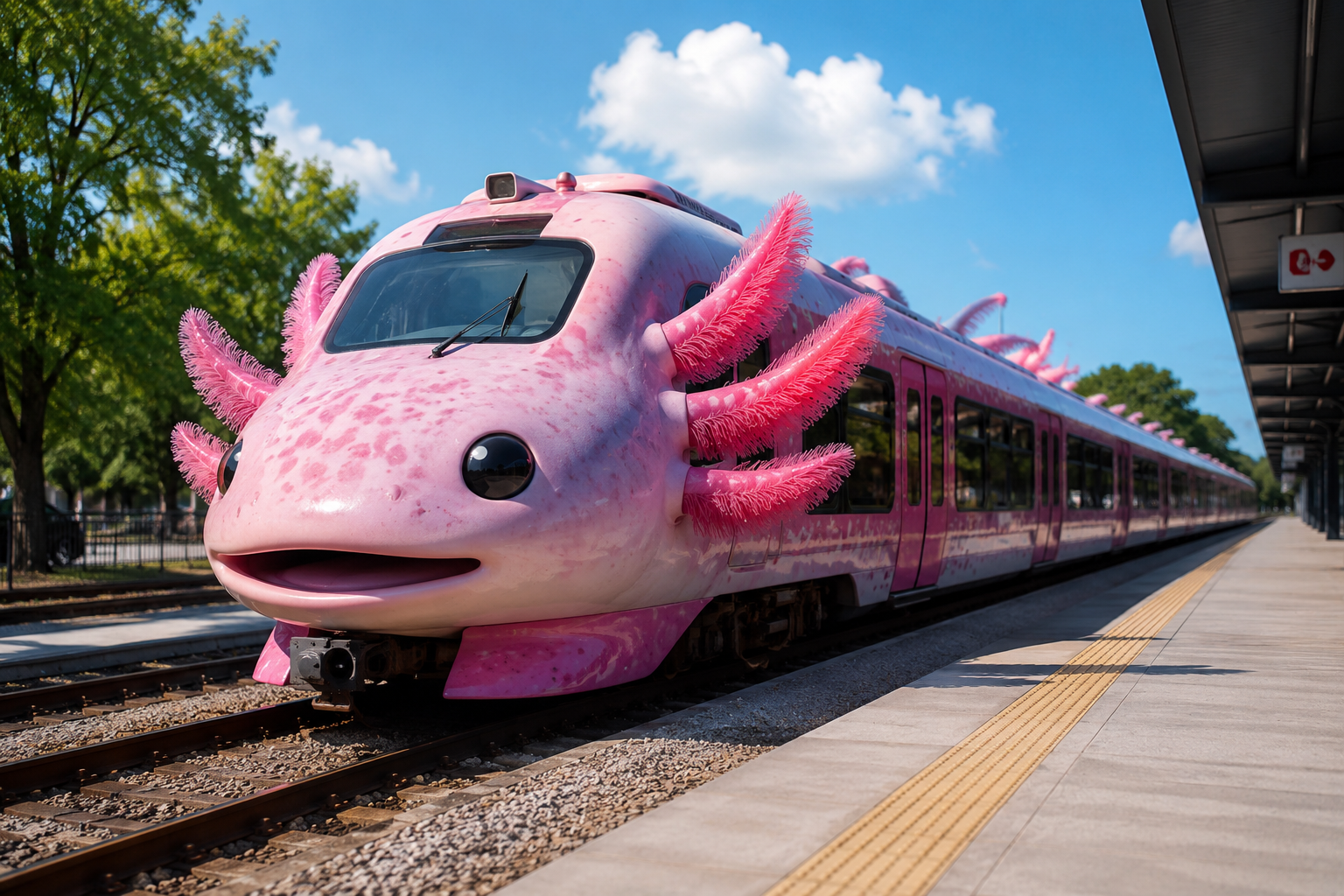
The new Ajolote Train in CDMX
The transformation of Mexico City’s transportation system has taken a significant step with the announcement of the Ajolote Train. Clara Brugada, the head of government, revealed the new name for the light rail line that symbolizes Xochimilco, a region known for its rich biodiversity and cultural heritage. This initiative is part of a broader strategy to improve the city’s mobility infrastructure ahead of the 2026 FIFA World Cup, which Mexico will co-host. One of the key developments is the enhancement of the network serving southern areas of the city, including vital connections between Xochimilco and Taxqueña.
What are the features of the new Ajolote Train?
The Ajolote Train is set to revolutionize public transport in the area with 17 new units aiming to improve service efficiency. The trains, adorned with images of ajolotes on a magenta and beige background, personify the local wildlife. Each train is designed to carry up to 750 passengers, an increase made possible by the investment in new rolling stock provided by China. This change increases the operational train fleet to 35, thus enhancing the passenger experience by reducing wait times to four minutes between convoys.
How will the renovation impact daily travel?
The renovation aims to significantly affect daily commuting with the capacity to transport over 250,000 people daily. Additionally, the travel time from terminal to terminal will now be a swift 30 minutes, down from the previous 40 minutes. This enhancement is due to the increased frequency and reliability of the service, promising to provide smoother transit experiences. By encouraging people to adopt public transport, the city aims to reduce traffic congestion and foster environmental sustainability.
What other mobility projects are planned?
Apart from the Ajolote Train, CDMX has several mobility projects to prepare for the World Cup. These include the renovation of the Huipulco Intermodal Transfer Center (CETRAM), a dinosaur-themed park called Coyosauria, and the upgrade of seven water wells. Moreover, a new trolleybus route from Huipulco to Ciudad Universitaria is planned. This service will be separate from the existing Line 12, with new electric buses ensuring sustainable travel solutions that align with the city’s strategic expansion goals.
How will the Tasqueña Terminal changes help?
The Tasqueña terminal has undergone a major transformation, now equipped with three platforms to facilitate simultaneous operations on two tracks. This upgrade includes full rehabilitation between Huipulco and Huichapan, ensuring enhanced service reliability. By modernizing key infrastructure, the governmental efforts aim to underscore public transportation as a means of achieving social equity and environmental justice, making sure that non-automobile transportation remains a viable and attractive option.
What are the benefits and features of these new trains?
New Ajolote trains are equipped with state-of-the-art features, such as universal accessibility, a sophisticated video surveillance system, auditory safety announcements, and regenerative braking technology. Furthermore, the trains include advanced signal lights, such as transit, brake, and hazard lights, to enhance safety. These features aim not only to improve the commuter experience but also to ensure safety and efficiency during travel, showcasing the city’s commitment to modern, sustainable public transport.
What improvements are made for passengers’ convenience?
To promote passenger convenience, extensive maintenance work has been conducted on areas from Las Torres to Estadio Azteca. This is aligned with the broader objective of creating a more seamless and connected public transportation network, enhancing the user experience for both daily commuters and international visitors anticipated for the upcoming World Cup. All these efforts converge towards positioning the light rail as a key alternative, linking crucial areas and offering a reliable travel option.
How many stations does the Ajolote Train serve?
The Ajolote Train line includes 18 stations and meanders through the CdMx districts of Coyoacán, Tlalpan, and Xochimilco. The journey covers over 13 kilometers, with stops at hubs such as Tasqueña, Xochimilco, and multiple other key locations. By covering a broad area with numerous connected stations, the train line serves as a backbone for public transport in these regions, facilitating easy and efficient passenger flows across critical city sectors.
What is the broader impact of these developments?
As CDMX gears up for the 2026 World Cup, these transportation upgrades symbolize the city’s commitment to modern infrastructure development. Beyond merely boosting capacity and reducing travel times, the Ajolote Train represents a strategic step in environmental stewardship and social equity. These public transport enhancements not only aim to benefit citizens by offering better and quicker journeys but also seek to present Mexico City as a global exemplar of urban mobility and sustainability.
These enhancements align with Mexico City’s strategic vision for the future, as it opens its doors to global visitors and seeks to become a leader in sustainable urban transport solutions. The city’s approach combines cultural awareness, as reflected in the design and branding of the train, with modern technological advancements, positioning the Ajolote Train as both an ambassador and a flagship of the city’s transportation infrastructure.


