
Mexico’s soccer celebration causes seismic event
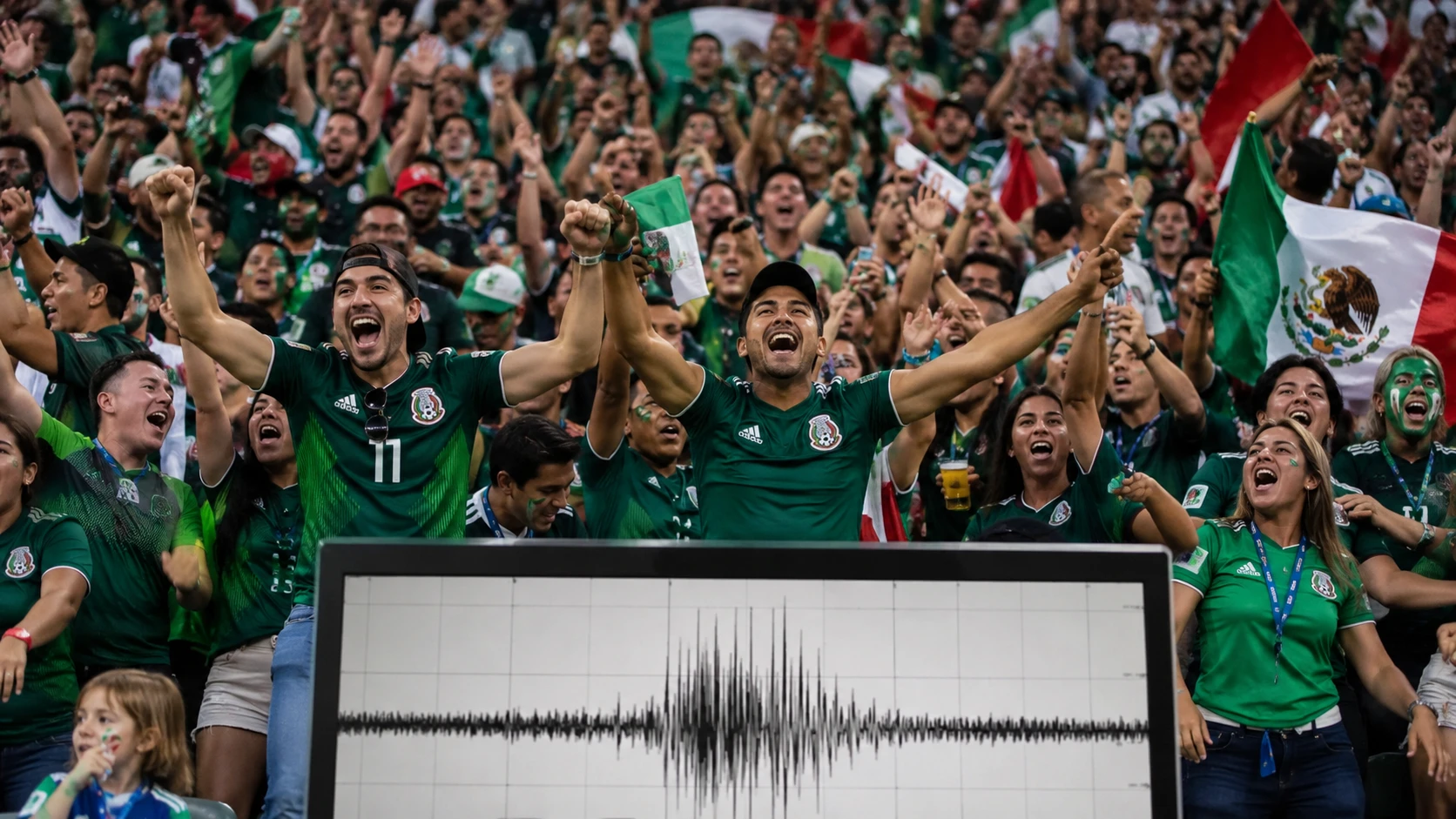
The recent clash between Mexico and Ecuador in the 2026 World Cup generated an unexpected phenomenon of scientific interest. During Mexico’s historic victory, the enthusiastic celebrations of fans were so intense that they triggered measurable seismic activity. This unique occurrence was recorded by seismic monitoring stations across the country, capturing the nation’s excitement as never before.
How did fan celebrations trigger a seismic event?
The jubilant celebrations by Mexican soccer fans caused a detectable seismic event during the World Cup match against Ecuador. The first seismic signal coincided with Julián Quiñones’ opening goal, where an immediate increase in ground vibration was noted. Minutes later, Raúl Jiménez’s goal produced a similar seismic signal. These vibrations were strong enough to be recorded, highlighting the fans’ synchronized jumping and cheering.
Why do stadium events cause detectable seismic activity?
Stadium events can generate detectable seismic activity due to the extraordinary sensitivity of modern sismographs. These instruments capture any ground movement, whether from natural or human activities. When thousands of fans jump simultaneously, the energy transmitted to the ground creates waves that travel through the subsurface. Such waves, though smaller than an earthquake’s, are identifiable if close to a measuring station.
Are these seismic events a threat?
The seismic activity from stadium celebrations is not a threat to public safety. These are superficial movements resulting from large human gatherings, similar to massive concerts or sports events attended by tens of thousands. The fans’ celebration in this World Cup matchup simply created a measurable impact on sensitive equipment without posing risks to the population.
Have sports celebrations caused seismic signals elsewhere?
Seismic signals from sports celebrations are not unheard of globally. Various instances have been documented where major sporting events caused detectable signals. Whether from a crucial soccer final or a decisive match, fan enthusiasm has left its mark on scientific instruments. The distinctive aspect of the Mexico-Ecuador match was its critical importance and the sheer intensity of the fans’ response.
The significance of the seismic event during the match
The match’s seismic event added a scientific layer to a significant sporting moment for Mexico. Combining the thrill of football with scientific intrigue, this occurrence captivated both sports and science enthusiasts. The victory itself was historic for the Mexican team, showcasing their skill and creating lasting memories for fans nationwide. This unexpected seismic signature etched the event further into national consciousness.
The role of modern technology in detecting seismic events
With advancements in seismic technology, even minimal vibrations are detectable. Modern sismographs have enhanced capabilities, allowing for precise monitoring of ground movement from various sources. The Mexico-Ecuador match is a case in point, where advanced technology allowed the capturing of fans’ energy on a grand scale. This technology continues to uncover fascinating insights into the impact of human activities.
A historic night for Mexico beyond the seismic data
Beyond the scientific anomaly, Mexico’s triumph over Ecuador was a remarkable achievement in its own right. The team exhibited strong performance, capitalizing on key opportunities and igniting celebrations everywhere, from stadiums to homes. The recording on sismographs is tangible evidence of Mexican fans’ fervor, encapsulating an unforgettable tournament night.
The broader implications of the event
This event demonstrates how interconnected human activities and scientific phenomena can be. It bridges the worlds of sports and science, illustrating the profound impact collective human emotions can have on the natural world. Such occurrences prompt further exploration into how modern technology can enhance our understanding of human interactions with the environment.
The blend of sports fervor and seismic science made this moment a unique part of World Cup history. The excitement surrounding Mexico’s victory extended beneath the surface, becoming a physical imprint of national pride registered by sismographs. This phenomenon reflects both the energy and unity of Mexican fans, reminding us how passionately sport can resonate through both human and scientific realms.


