
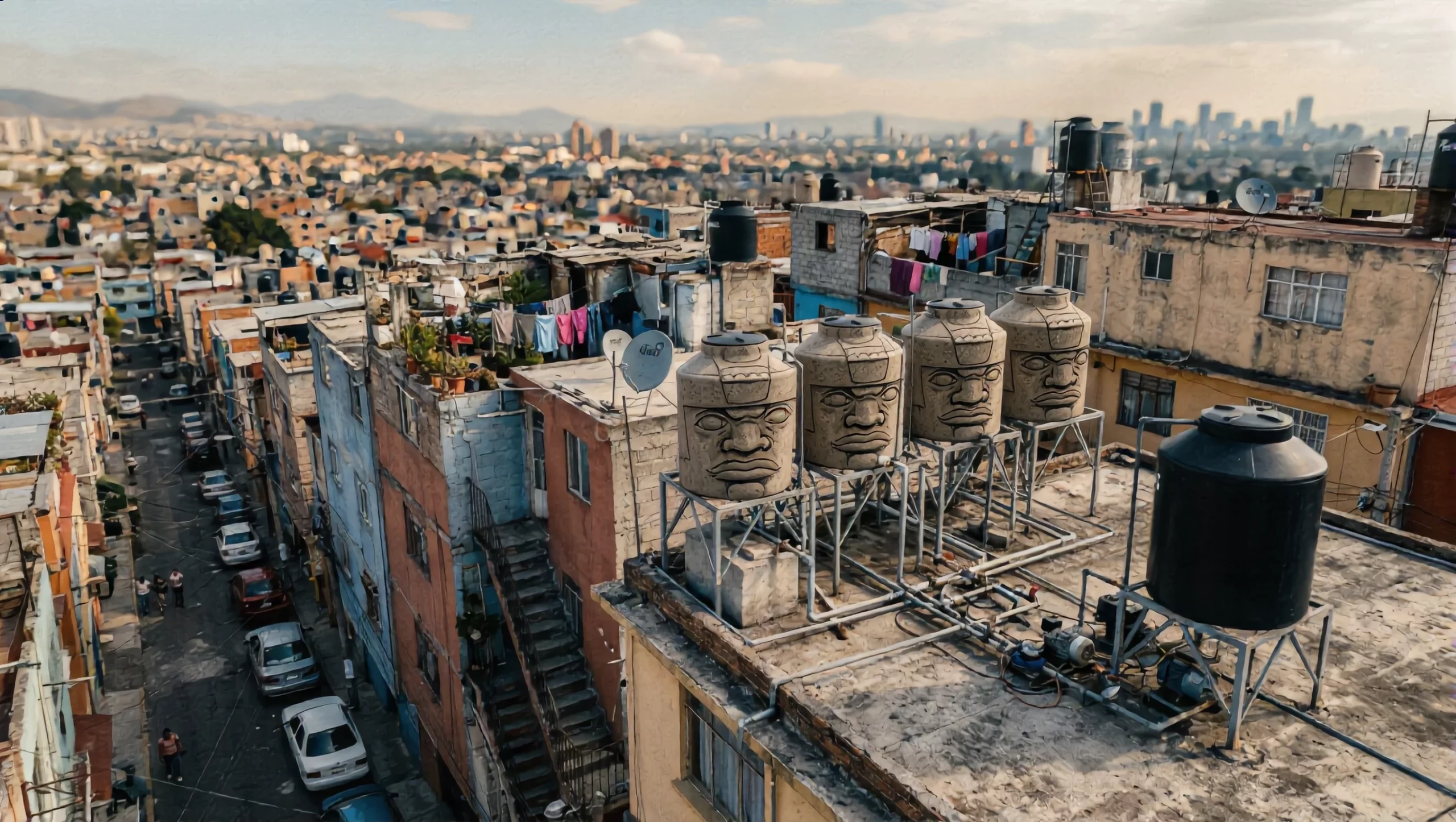
El Tinacatl: An artistic transformation
The origin of El Tinacatl
El Tinacatl emerged as an innovative fusion of art and daily life in Mexico. Located in Zacapoaxtla, Puebla, it transformed a common household object, a water tank, into a monumental Olmec head. This creation by the collective Hijos del Maíz quickly gained traction on social media. It captivated audiences by blending the everyday urban landscape with the mystique of pre-Hispanic civilizations. Through this transformation, El Tinacatl challenges perceptions, inviting viewers to explore the intersection of contemporary utilitarian objects and ancient sacred art.
The significance of Olmec heads
The Olmec heads are among the most recognized symbols of ancient Mexico, known for their massive scale and intricate craftsmanship. Carved from basalt, these heads date back thousands of years, symbolizing power and identity in Mesoamerican history. By reimagining this iconic imagery through El Tinacatl, Hijos del Maíz not only pays homage but also brings the dialogue between historic and modern contexts into urban spaces, offering a fresh lens on cultural heritage.
Hijos del Maíz: Transformative artistry
Hijos del Maíz distinguishes itself by revitalizing Mexican cultural symbols through art. They seamlessly weave indigenous elements with contemporary interpretations, creating works that maintain cultural depth. With El Tinacatl, they executed a viral art piece without losing its cultural richness. They effectively demonstrated that art can manifest in unconventional places, merging deeply rooted cultural narratives with modern creativity, thereby altering perceptions of everyday objects through inventive storytelling.
Reviving pre-Hispanic aesthetics
There is a burgeoning interest in pre-Hispanic aesthetics in Mexico’s art scene. Artists and designers increasingly reference ancient motifs from cultures such as the Mexica, Maya, and Olmeca. El Tinacatl falls within this movement, revitalizing cultural imagery. Its unexpected location on a rooftop underscores Mexico’s capacity for artistic innovation. This trend reflects both a reconnection with visual roots and a dynamic reinterpretation of heritage, crafting new narratives that resonate in a contemporary context.
Urban canvases and Mexican creativity
Mexico’s urban environments thrive as canvases for creativity. The deployment of El Tinacatl exemplifies this national trait, transforming ordinary spaces into platforms for artistic expression. In a culture where symbolism and color are everyday occurrences, even a water tank can become a canvas. This intervention by Hijos del Maíz not only beautifies the landscape but also engages the public in cultural discourse, proving that art can emerge from and belong to the community.
Cultural identity and social media
El Tinacatl’s viral success illustrates the public’s affinity for cultural expressions that refreshingly reinterpret Mexican history. Social media amplified its reach, sparking dialogue and cultural pride. The piece became a subject of fascination, attracting attention for its ability to honor the past while engaging humor and creativity. Through the lens of social media, art transcends traditional barriers, becoming accessible and stimulating cultural conversations on a larger scale.
Art beyond the gallery
El Tinacatl demonstrates that impactful art need not be confined to galleries or formal spaces. By appearing in residential areas, it challenges the notion of art exclusivity. This project invites broader audiences to engage with art, blending the sacred with the everyday. Its placement emphasizes that cultural dialogue can occur anywhere, reflecting on shared histories and contemporary identities. Art thus becomes an inclusive experience, inviting community engagement and interaction.
The enduring connection
El Tinacatl resonates with a wide audience by bridging ancient and modern Mexican themes. Its symbolism underscores the persistence of historical narratives in shaping collective identities. This artwork serves as a reminder that Mexican art continually evolves, rooted in memory yet open to innovation. By engaging with the past while envisioning the future, El Tinacatl enriches cultural discourse, fostering a deeper appreciation and understanding of Mexican heritage.
Conclusion: Bridging past and present
El Tinacatl stands as a testament to the power of artistic innovation in connecting past and present. This piece exemplifies how ordinary spaces can be transformed into canvases for cultural expression, engaging public interest and dialogue. Through its imaginative recontextualization of ancient symbolism, El Tinacatl not only captivates but also educates, reminding us of the rich tapestry of Mexican identity woven through time. The work encapsulates the ability of art to inspire, challenge, and unite diverse narratives across generations.


