
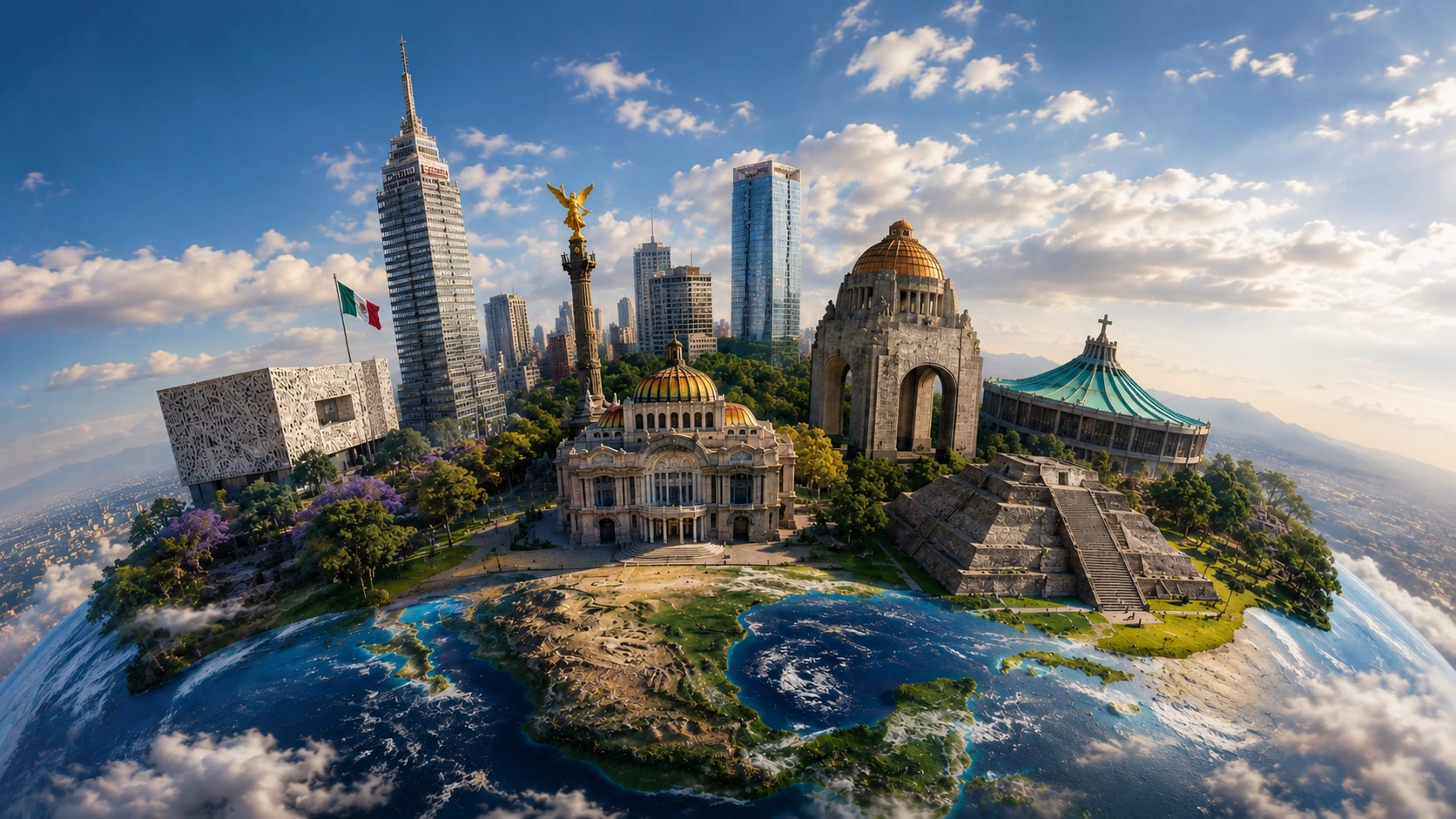
CDMX named Cultural Capital of the World 2026
The City of Mexico has been acclaimed as the Cultural Capital of the World for 2026 by the German agency Tourlane. This prestigious title places it above traditionally influential cities in the spheres of art, heritage, and cultural life. The recognition is based on an international analysis considering factors like the number of museums, galleries, cultural events, historical sites, and public access to these activities. This affirms what millions of residents and visitors already know: culture thrives throughout CDMX, seamlessly intertwining with everyday life.
What sets CDMX apart as a cultural hub?
CDMX stands out as a vibrant cultural hub due to its unparalleled diversity and rich heritage. In one area, visitors can encounter Mexica vestiges, colonial architecture, monumental murals, and contemporary art galleries. The city boasts nearly 200 museums and numerous cultural spaces, theaters, libraries, and art centers. Iconic locations like the Palacio de Bellas Artes, the Museo Nacional de Antropología, and Frida Kahlo’s Casa Azul contribute to its vast cultural offering. Beyond these iconic venues, CDMX’s cultural vibrancy extends into its streets, where music, markets, fairs, design, cuisine, and popular expressions contribute to an ever-present cultural experience.
Insight into the Tourlane 2026 ranking
The Tourlane 2026 ranking listed CDMX as the foremost cultural city, surpassing historically renowned European cities with rich art and cultural ties. Key cities include London, Paris, Berlin, Edinburgh, Vienna, Barcelona, Prague, Amsterdam, and Florence. CDMX’s top position signifies a noteworthy achievement, emphasizing an emerging focus on less traditionally recognized cultural centers. This change reflects a global perception shift towards appreciating diverse cultural landscapes beyond Europe.
Why did CDMX win the cultural title?
CDMX won the title due to factors like cultural accessibility. Unlike other capitals where art experiences are costly, CDMX offers a wealth of affordable or free activities. Its ability to blend tradition with modern creativity also played a significant role. The city sustains its millennial historical legacy while fostering new artistic expressions, festivals, culinary innovations, and contemporary creative spaces. Diversity across each neighborhood in terms of pre-Hispanic history, modern art, architecture, literature, cinema, design, and culinary arts further enhanced its cultural prominence.
How does culture define CDMX’s identity?
The international recognition underscores a perceptual shift highlighting Latin American capitals on a global stage. Traditionally, cultural capitals were European-centric, but CDMX challenges this notion, proving cultural vibrancy isn’t limited to Europe. CDMX doesn’t merely preserve its heritage; it reimagines and integrates it into everyday life. The fusion of memory, creativity, and daily rhythm makes it unique. In CDMX, culture isn’t an occasional activity or luxury; it’s a daily occurrence reflected in monumental murals, hidden bookstores, Metro sounds, bustling plazas, and its ability to evolve while maintaining its core essence.
What cultural experiences are unique to CDMX?
Unique cultural experiences in CDMX encompass its varied landscapes where pre-Hispanic ruins meet contemporary art. Festivals and events like the Day of the Dead celebrations and Zona Maco art fair showcase its rich traditions and modern influences. Culinary experiences, blending indigenous and international cuisines, and weekly art markets offer vibrant expressions of the city’s culture. Museums and galleries feature exhibitions that tell both ancient and modern stories, while music permeates the environment, from classical performances to modern pop at live venues.
Who decides the cultural fate of cities globally?
The global cultural status of cities is often determined by agencies like Tourlane, which analyze factors such as infrastructure, cultural offerings, accessibility, historical significance, and innovative contributions to the arts. These evaluations reflect shifts in global cultural priorities, democratizing the perception of what constitutes a cultural capital. Agencies utilize data and expert insights to highlight cities that offer comprehensive and immersive cultural experiences, considering dynamics that attract international visitors and local contributions to the arts and culture sectors.
How does CDMX contribute to cultural trends?
CDMX contributes to cultural trends by actively fostering innovation in arts and cultural expressions. Artists from diverse backgrounds continuously converge in this metropolitan setting, enriching the city’s cultural tapestry. The city hosts international artists, creating platforms for global cooperation and idea exchange. Traditional crafts and contemporary design movements coexist, influencing fashion, architecture, and multimedia arts. By blending the old with the new, CDMX sets trends observed across Latin America and beyond, reinforcing its blueprint as a vibrant cultural epicenter.
Conclusion on CDMX as a leading cultural capital
The declaration of CDMX as the Cultural Capital of the World 2026 marks a pivotal moment in recognizing its comprehensive cultural contributions worldwide. Such an accolade reflects not just its historical richness but also current initiatives leading the artistic and cultural spheres. This recognition continues to enhance CDMX’s reputation as a global destination, encouraging further exploration and investment in its dynamic cultural scene. As the world increasingly recognizes diverse cultural capitals, CDMX stands as a model of inclusive, accessible, and vibrant cultural life.


