
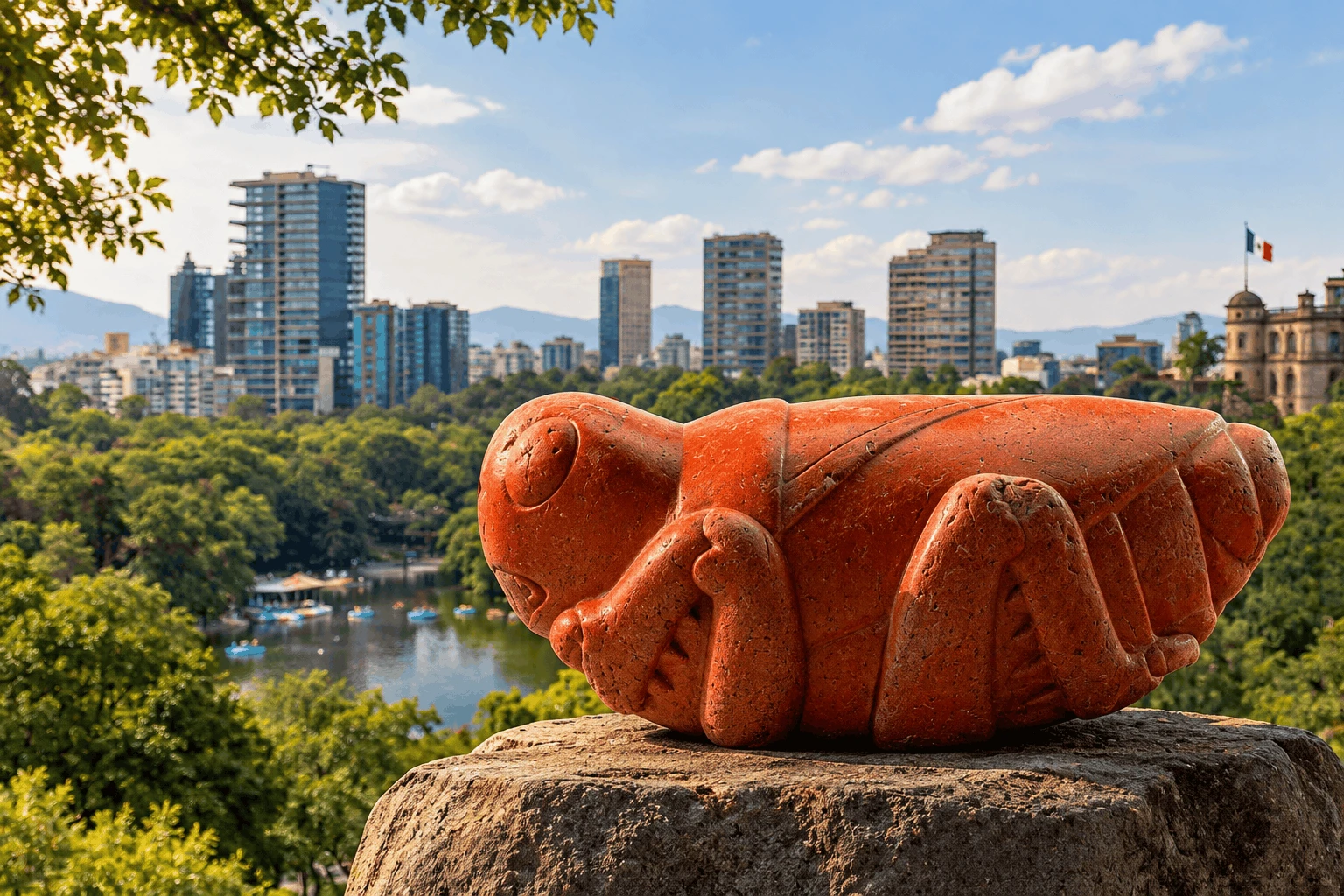
Chronicling the red grasshopper of Chapultepec
The red grasshopper of Chapultepec is a notable artifact with a rich tapestry of cultural and historical significance in Mexico City. This small yet monumental sculpture has a deep connection with the indigenous traditions and history of the region. Residing now in the Museo Nacional de Antropología, this exquisite piece dates back to the Postclassic Period between 1325 and 1521. Its story stretches from its probable discovery in the 18th century to becoming a central artifact in the museum’s collection today.
What is the origin of the red grasshopper sculpture?
The red grasshopper sculpture, made from a single block of coralina, a reddish stone, originates from the region of Chapultepec, one of Mexico City’s most significant areas. Originally believed to have been discovered in 1891, historical research suggests its origins could date back to the late 1700s during the construction of the Chapultepec Castle. The sculpture is a remarkable representation of prehispanic art and demonstrates the intricate artistry of the time.
Why is Chapultepec historically significant?
Chapultepec, known for its rich historical backdrop, was a central site during the time of the Aztec Empire. It housed essential natural springs that sustained Tenochtitlan, the Aztec capital. These springs were not only vital for practical purposes but also held spiritual significance. The red grasshopper sculpture was found near these ancient water sources, connecting it deeply to the spiritual and practical life of ancient Mexican societies.
What are the physical characteristics of the sculpture?
The red grasshopper sculpture is crafted from coralina, a material valued for its strength and vibrant color. Measuring 16 centimeters in height, 19.5 centimeters in width, and 47 centimeters in length, the sculpture brilliantly captures the detailed anatomy of a grasshopper. The artists of the time displayed extraordinary skill in capturing the creature’s form, using only the natural properties of the stone to enhance its lifelike appearance.
How does the sculpture relate to indigenous mythology?
In prehispanic mythology, the grasshopper was symbolically linked to the wind and fertility, considered sacred and associated with Ehécatl, the wind god. The sculpture’s connection to the elements of air and water further emphasizes its spiritual importance. It reflects the deeply symbolic relationship ancient cultures had with natural elements, viewing them as extensions of their religious and cultural beliefs.
What are the scientific insights about the sculpture?
Entomological studies have identified the sculpture as depicting a larval stage of a grasshopper in the Acrididae family, rather than an adult insect. This insight reveals the deep understanding that ancient artists had of their natural environment, showcasing their keen observational abilities in capturing developmental stages of local fauna. This knowledge adds an intriguing layer of historical and scientific interest to the artifact.
How did the sculpture journey to the museum?
Following its discovery, the red grasshopper sculpture changed hands among private collections before finding its way to the Museo Nacional de Antropología. The piece was part of José Mariano Sánchez Mora’s collection and later documented by Maximilian Franck in 1828. Alongside its travels through various owners, it has accumulated a rich history that now forms part of the national heritage exhibit in the museum’s Mexica Room.
What is its current display and significance?
Today, the red grasshopper sculpture is prominently displayed in the Mexica Room of the Museo Nacional de Antropología. As a testament to the artistic and cultural achievements of prehispanic Mexico, it sits among other artifacts that together narrate the complex history of the region. The piece not only illustrates the artistry of the time but also offers a window into the philosophical and spiritual beliefs of ancient Mexican societies.
What mysteries still surround the red grasshopper?
Despite extensive research, the full story of the red grasshopper sculpture remains partially shrouded in mystery. Its exact date of discovery and the specifics of its representation continue to intrigue historians and archaeologists. These uncertainties contribute to its allure, making it an artifact that captivates both visitors and scholars, enriching the narrative of Mexico’s vibrant past.
The red grasshopper of Chapultepec is more than just a sculpture. It is a cornerstone for understanding the intersection of art, nature, and spirituality in ancient Mexican societies. Its enduring mystery and beauty draw thousands of visitors, serving as a reminder of the complex cultural landscapes that preceded modern Mexico City.


