
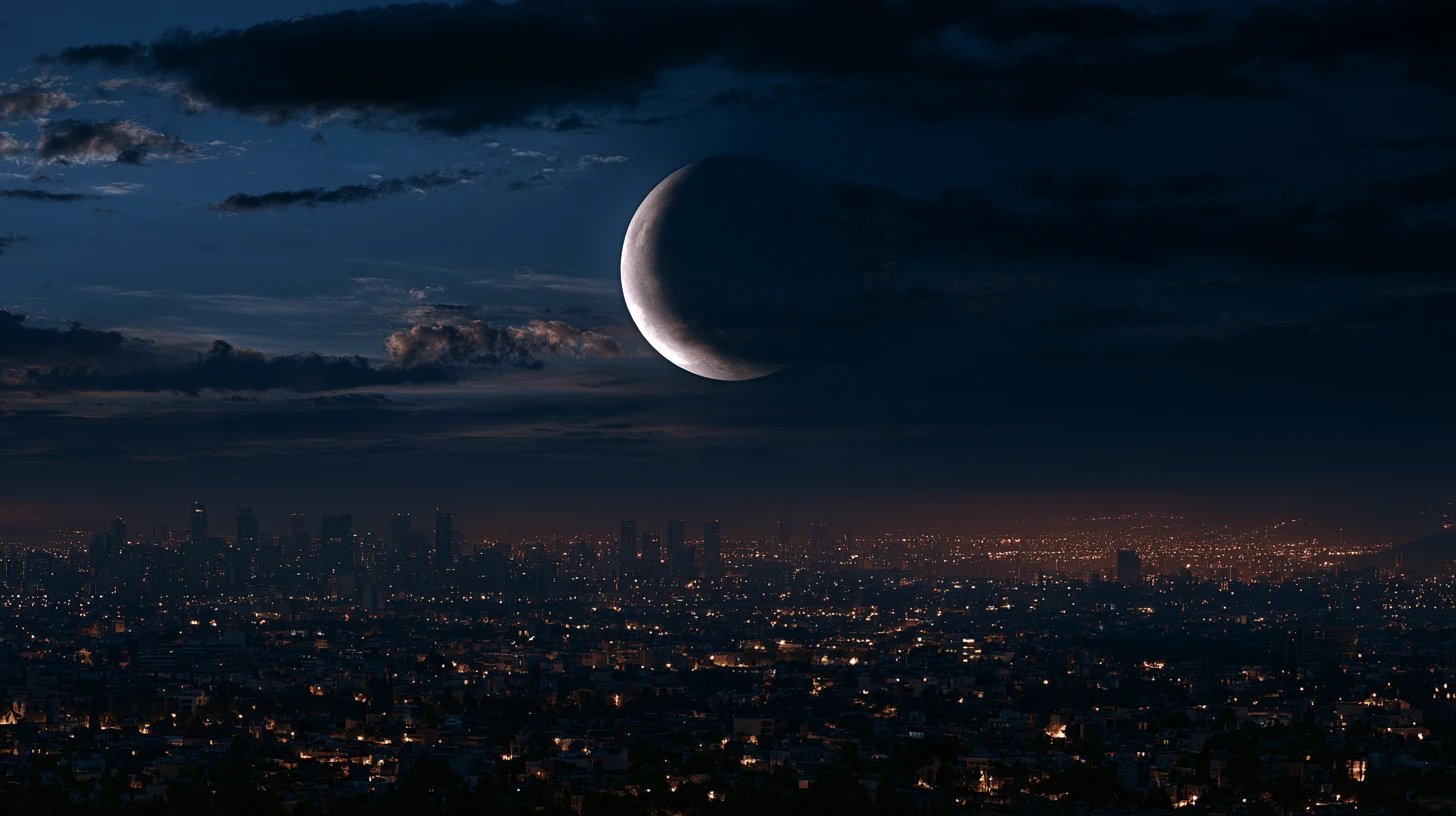
Upcoming lunar eclipse visible in Mexico City
In August 2026, Mexico City will be treated to a spectacular celestial event: a lunar eclipse that will captivate skywatchers across the region. On the morning of August 28th, the Moon will undergo a dramatic transformation, delighting astronomers and casual observers alike. This phenomenon offers a unique chance to witness the Earth’s shadow enveloping the Moon, creating an awe-inspiring display that requires no specialized equipment to enjoy fully. As the event draws near, anticipation is growing among both seasoned astronomers and budding enthusiasts in the capital.
When will the lunar eclipse occur?
The lunar eclipse is scheduled to occur in the early hours of August 28, 2026. This stunning event will be visible from Mexico City and much of the nation. The eclipse will reach its most captivating phase at approximately 2:12 AM (Central Time), when the Earth’s shadow will cover the majority of the Moon’s surface. This time marks the peak moment when the Moon will appear its darkest, an occasion many are marking on their calendars.
Key timings for observing the eclipse
The partial phase of the eclipse is anticipated to begin at 12:35 AM and will continue until 3:49 AM. These several hours offer ample time to find an optimal spot to view the progression of the lunar shadow. Skywatchers will have the opportunity to witness the Moon gradually changing as it moves through the different phases of the eclipse, providing an extraordinary viewing experience.
Visual expectations during the eclipse
During this eclipse, although the Moon will darken significantly, it will not disappear completely. The Earth’s atmosphere filters and bends sunlight around our planet, casting a glow on the Moon. This effect can result in shades ranging from copper-red to deep orange, known as a “blood moon.” Such colors are influenced by the atmospheric conditions at that time, making each eclipse uniquely hued.
Top spots in Mexico City for eclipse observation
Though the eclipse will be visible from any location with a clear sky view, several places in Mexico City provide optimal viewing conditions. Chapultepec Park offers expansive open areas for excellent visibility, while Parque La Mexicana’s wide plazas ensure unobstructed sky observation. The Cerro de la Estrella provides a renowned natural vantage point. For those looking to escape light pollution, the Desierto de los Leones offers a more remote setting. Rooftops and terraces with clear horizons are also ideal spots for witnessing the eclipse.
Is a telescope needed to view the eclipse?
The lunar eclipse can be comfortably observed without a telescope. The Moon’s changes are visible to the naked eye. However, for those interested in details, binoculars or a small telescope could enhance the view, revealing finer aspects of the lunar surface and the shadow’s progression. For photographers keen to capture the moment, a smartphone in night mode or a camera on a tripod with long exposures will suffice.
Understanding the science behind the lunar eclipse
Lunar eclipses occur when the Earth aligns between the Sun and the Moon, casting the Earth’s shadow on the Moon’s surface. Unlike solar eclipses, which require eye protection, lunar eclipses are completely safe to view without any optical aids. This particular eclipse will occur during the full Moon, making it a highly anticipated event for those interested in astronomy. The total duration provides a comprehensive look at the gradual movement of celestial bodies.
Significance of lunar eclipses in astronomy
Lunar eclipses provide astronomers with invaluable opportunities to study the Earth’s atmosphere. As sunlight filters through our atmosphere and casts various hues on the Moon, it offers vital information about the composition and behavior of the Earth’s atmosphere at various altitudes. This makes each eclipse a significant event for scientific research, in addition to being a captivating natural spectacle for the general public.
Concluding thoughts on the upcoming lunar event
This August 28, the skies over Mexico City will host a remarkable astronomical event that promises to be both educational and visually stunning. As the early morning unfolds, the lunar eclipse will serve as a reminder of the dynamic universe we inhabit. Whether viewed from a backyard or a designated observation spot, this celestial performance is not to be missed. It offers a chance to connect with nature and understand our place within the cosmos.


