
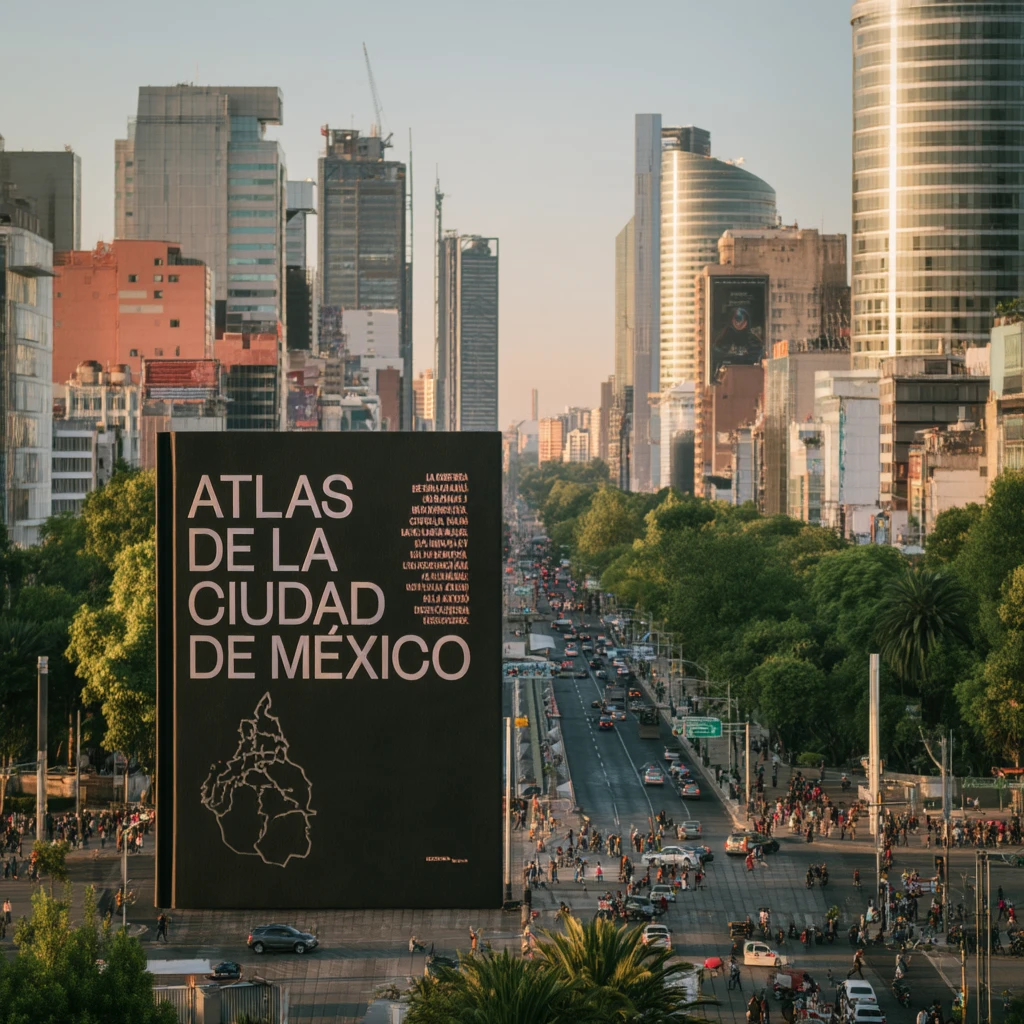
Exploring Mexico City with a new atlas
The “Atlas de la Ciudad de México” offers a fresh perspective on Mexico City. Compiled by Gustavo Guzmán Favela and Carlos Castro Correa, this publication combines detailed maps and fascinating insights. With 116 original maps, the atlas reveals the hidden secrets of the capital. This comprehensive visual journey covers diverse topics, from the city’s transformations to its vibrant daily life.
What makes the Mexico City atlas unique?
The “Atlas de la Ciudad de México” is unique in its approach to exploring the city. It captures the complexity of Mexico City through 116 original maps. The atlas, created by Gustavo Guzmán Favela and Carlos Castro Correa, provides a new way to experience the contrasts and stories of the city. It highlights natural phenomena, social dynamics, and historic transformations, presenting them in a visually appealing format. This approach allows readers to see the city in ways they might not have considered before.
Who are the creators of the atlas?
Gustavo Guzmán Favela and Carlos Castro Correa are the minds behind the “Atlas de la Ciudad de México.” Guzmán Favela is known for his involvement in projects related to sports, culture, and media. Castro Correa, a data scientist and professor, specializes in explaining complex phenomena simply. Together, they created a publication that merges research and storytelling to offer a new narrative of the city. Their collaborative efforts bring a fresh perspective to the exploration of urban spaces.
What aspects of Mexico City does the atlas cover?
The atlas covers a wide range of themes. It examines geographic contrasts, population demographics, and even the city’s subterranean movements like soil sinkage and micro-quakes. The publication delves into cultural aspects such as distribution patterns of cafes, markets, and bakeries. It also explores social events and gatherings, offering insights into Mexico City’s night scene and public celebrations. This diverse coverage makes the atlas a valuable resource for understanding the multifaceted nature of the city.
How does the atlas challenge perceptions of the city?
The “Atlas de la Ciudad de México” challenges common perceptions by unveiling lesser-known facts about the city. It highlights that the city’s waterways extend beyond popular areas like Xochimilco. The atlas also reveals surprising facts, such as the city’s geographic center not aligning with popular assumptions. By analyzing aspects like the existence and disappearance of street markets, it portrays the city as an ever-changing urban landscape.
What historical insights does the atlas provide?
The atlas provides historical insights by tracing the city’s transformation from Tenochtitlán to modern-day Mexico City. Through photos, maps, and descriptions, it reconstructs urban changes and acknowledges the enduring presence of indigenous communities. These historical narratives present data not merely as statistics, but as stories fostering a deeper understanding of the city and its inhabitants. This historical context enriches the reader’s connection to the city’s identity and evolution.
Where can you find the atlas?
The “Atlas de la Ciudad de México” is available through Hasel Algorithms and on platforms like Amazon. The book is priced at $1,880 pesos. Its availability makes it accessible to those interested in the city, whether they live there or are simply curious. The atlas serves as both an educational tool and a coffee table book for enthusiasts of illustrated publications, cartography, and urban design.
What value does the atlas offer to readers?
The atlas offers readers the chance to discover Mexico City in a comprehensive manner. It compiles diverse information into a cohesive whole, making it easier to understand the city’s complexities. By gathering the city’s various facets into one publication, the atlas invites exploration without needing to leave home. This consolidated view of the city promotes a deeper appreciation for its dynamics and encourages further curiosity about its many layers.
How can the atlas enhance one’s understanding of Mexico City?
By presenting the city through varied maps and narratives, the atlas enhances understanding by showing connections and contrasts within urban life. It paints a picture of a city that is constantly redefining itself, stressing the importance of historical roots alongside modern developments. This broader understanding allows residents and visitors alike to appreciate the rich tapestry of Mexico City, encouraging them to explore further beyond the customary boundaries.
In conclusion, the “Atlas de la Ciudad de México” stands as a testament to the vibrant and complex nature of Mexico City. By offering unprecedented access to the city’s diverse stories and structures, the atlas becomes a valuable companion for anyone eager to delve into the essence of this remarkable metropolis. The insights provided by Guzmán Favela and Castro Correa invite readers to see and appreciate the hidden depths of Mexico City like never before.


