
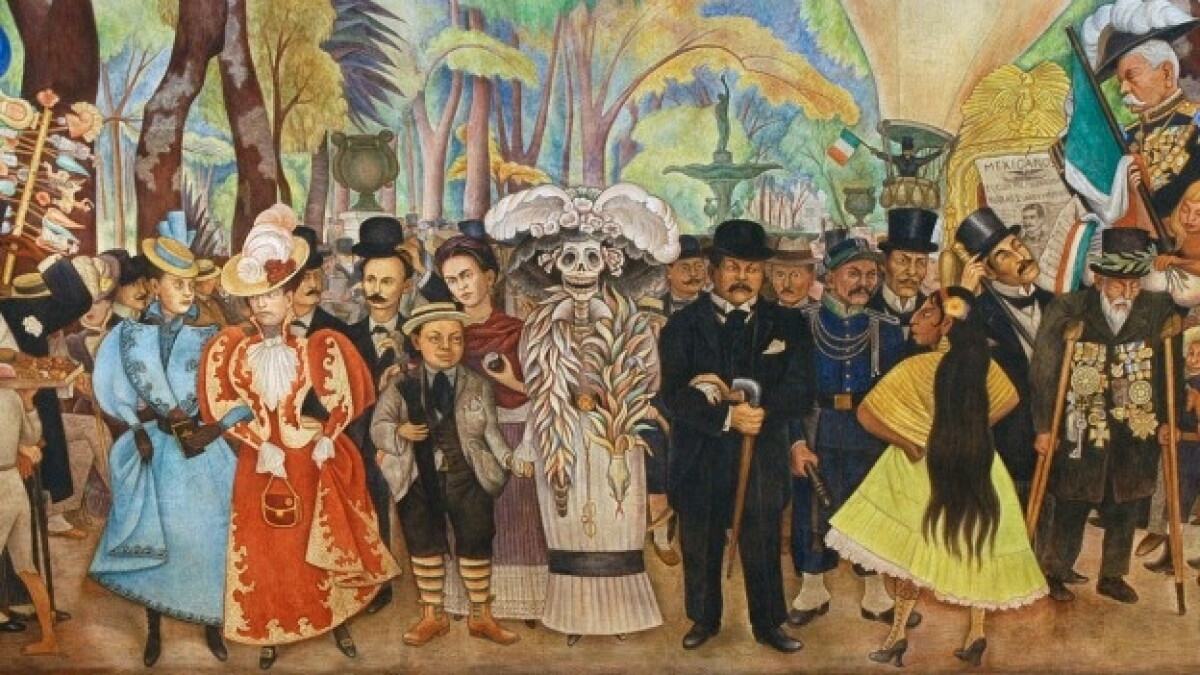
Mexican muralists depict Day of the Dead
The Day of the Dead is a cornerstone of Mexican culture, celebrating the complex relationship between life and death. Renowned muralists such as González Camarena, Orozco, Rivera, and Rodríguez Lozano offer visual representations of this tradition through their unique works. Each presents a distinct perspective on the rituals and symbols associated with the Day of the Dead, reflecting the diverse ways in which Mexicans commemorate their deceased loved ones. Their works, housed in the Museum of the Palace of Fine Arts, capture the intersection of art, memory, and cultural identity.
How does González Camarena depict the Day of the Dead?

Jorge González Camarena’s painting “La ofrenda” (1932) captures the essence of the Day of the Dead through the depiction of an altar. This artwork symbolizes how Mexicans celebrate their deceased loved ones, combining elements such as copal incense, marigold flowers, and photographs into a domestic setting. Each item on the altar serves a purpose, making the past palpable in the present. The altar is not just a static display but a living narrative that establishes a connection between different generations, celebrating shared histories and cherished memories.
What is Orozco’s perspective on death?

José Clemente Orozco’s “El muerto” (1925) shifts the focus to the physicality of death. In this artwork, the viewer confronts the undeniable reality of a lifeless body, presenting death as a tangible, uncomfortable truth. Orozco’s work consistently tackles human and social tensions, offering viewers a raw, unfiltered perspective on the human experience. This piece invites reflection on how mourning transcends celebration, speaking to the duality of remembering and accepting absence as part of the grieving process.
How does Diego Rivera illustrate public celebrations?

Diego Rivera’s”Día de Muertos (La fiesta en la calle)” (1923–1924) captures the communal aspect of the Day of the Dead. His mural portrays vibrant street festivities, demonstrating how death is a shared experience that permeates public spaces. Through scenes of bustling plazas, marketplaces, and musical gatherings, Rivera emphasizes the cultural richness derived from public interaction. His commitment to depicting everyday life underlines how collective memory is built through shared customs and festive engagements.
What intimate view does Rodríguez Lozano provide?

Manuel Rodríguez Lozano’s “El velorio” (1927) offers an intimate portrayal of mourning. Unlike the more public celebrations, this work illustrates a small, solemn gathering centered around the deceased. It highlights how Mexican communities unite in grief, offering support and companionship to the bereaved. This painting underscores the importance of community solidarity in navigating the mourning process, where gestures, silence, and presence become significant expressions of shared sorrow.
How do these artworks reflect cultural diversity?
The Day of the Dead practices aren’t monolithic across Mexico. Each painting illuminates different facets of this cultural diversity. While altars, cemetery visits, and community gatherings share common symbols, their expressions differ by region and family traditions. This variability reflects the rich tapestry of Mexican cultural heritage. These artworks remind us that traditions evolve, adapting to new contexts while preserving core sentiments, thus sustaining their relevance across generations.
Why do these pieces matter today?
These murals by Camarena, Orozco, Rivera, and Lozano serve as cultural artifacts that connect past and present. Situated in the Museum of the Palace of Fine Arts, they act as a dialogue between historical and contemporary perspectives. By engaging with these artworks, modern audiences can reconsider the heritage and meanings behind the Day of the Dead. They ensure the resilience of cultural memories, prompting ongoing reflection on human experiences beyond death.
What role does art play in memory and identity?
Art, as exemplified by these muralists, is integral to the preservation of Mexican identity. The depictions of Day of the Dead rituals through art transform personal and collective memories into shared cultural narratives. These murals capture the nuances of death as both an end and a continuation—a space where memory and identity interweave through time. These artists highlight how cultural traditions inform and shape the narratives of individual and community identity.
How do we interpret the diversity of traditions?
Interpreting these artworks encourages a broader understanding of the Day of the Dead. The intricate depictions highlight that there is no singular manner of engaging with these traditions. Each piece invites viewers to explore diverse interpretations of memory, life, and death. These explorations underscore the complexities within Mexican cultural practices, presenting an inclusive narrative open to continual reinterpretation and appreciation. In conclusion, the artworks of González Camarena, Orozco, Rivera, and Rodríguez Lozano offer invaluable insights into the Mexican Day of the Dead. They emphasize the dynamic interactions between life, death, memory, and art. Each piece is a testament to how traditions remain alive through creative representation, ensuring cultural continuity and relevance. These murals provide a lens to perceive and appreciate the depth and breadth of Mexican cultural practices centered around commemorating those who have passed.


