
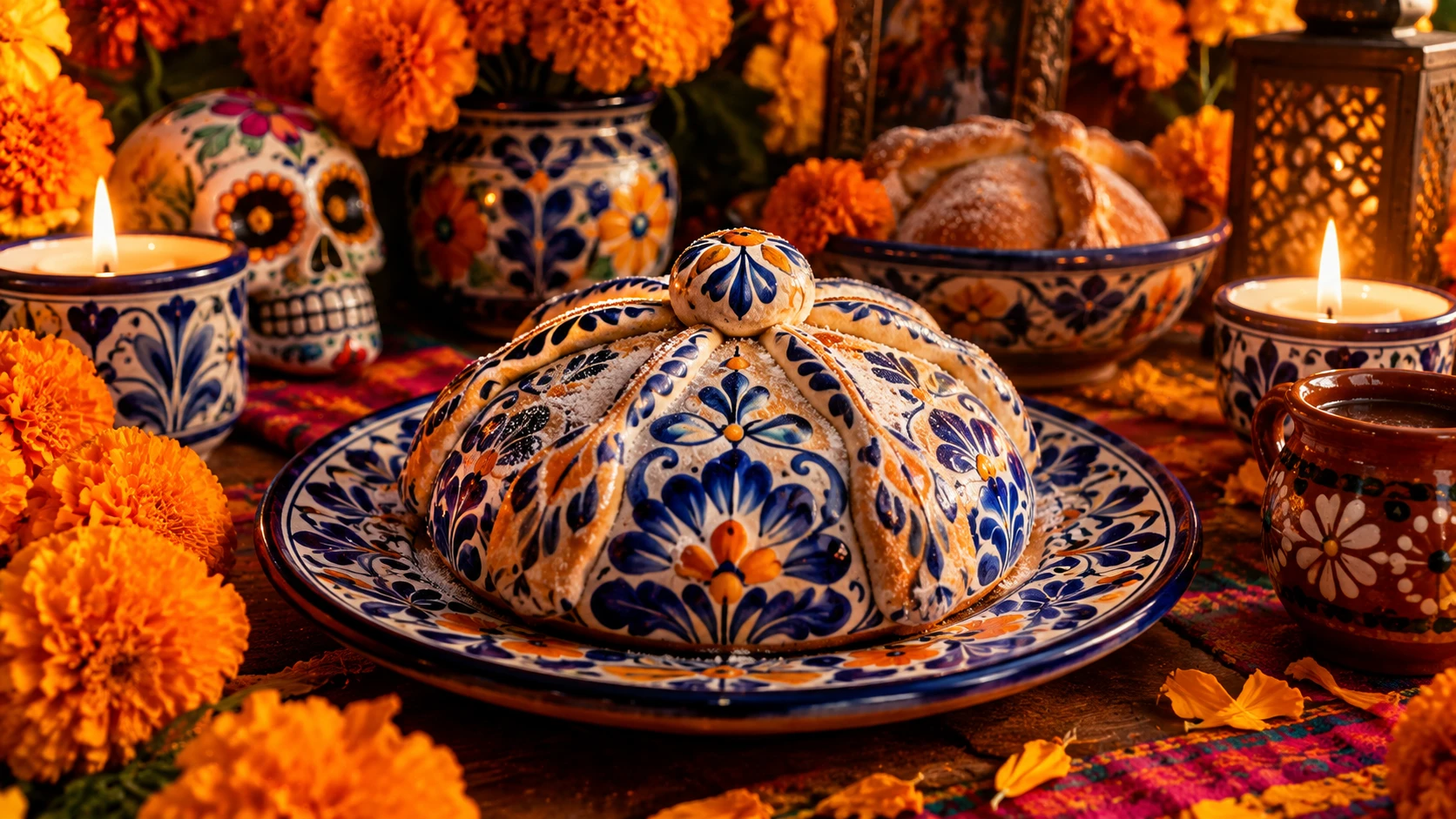
Mexican bakery unveils Talavera-style pan de muerto
In Coyoacán, a vibrant district of Mexico City, Croque Voyage bakery has added a unique twist to the traditional pan de muerto for Día de Muertos 2026. This beloved seasonal bread now features designs inspired by Talavera, an iconic Mexican ceramic art form. The bakery’s new creation combines culinary artistry with cultural heritage, reflecting both the traditional flavors of the celebration and the aesthetic of Talavera’s blue and white ceramics. This blend of food and art highlights Mexico’s dynamic cultural landscape.
What makes the Talavera-style stand out?
The Talavera-style pan de muerto at Croque Voyage is distinct for its decorative approach, drawing inspiration from traditional Talavera ceramics. These ceramics are characterized by their glossy finish and intricate designs in cobalt blue, reminiscent of those produced in Puebla and Tlaxcala. Croque Voyage artistically incorporates these elements into the bread, creating a piece that bridges culinary and visual artistry. This unique approach has made their bread a standout during the 2026 Día de Muertos season and a testament to the bakery’s innovative spirit.
A closer look at Talavera ceramics
Talavera pottery originates from Puebla and Tlaxcala, regions known for their rich artisan history. Brought to Mexico in the 16th century by Spanish potters, the craft developed into a unique local tradition, blending Spanish, Arabic, Chinese, Italian, and indigenous influences. Each piece undergoes a meticulous process: formed from two types of clay, dried for weeks, then glazed and hand-painted with natural mineral pigments before a second firing. This intricate process ensures the vibrant colors and iconic designs that are celebrated globally.
Tasting notes: What to expect
The Talavera-themed pan de muerto offers a sensory experience beyond its visual appeal. Priced at 90 pesos, this variant is infused with azahar and vanilla, featuring a hint of mezcal. Its flavor profile blends traditional tastes with a modern twist, providing a rich and aromatic treat that appeals to both purists and those seeking new culinary experiences. This harmonious mix of flavors underscores Croque Voyage’s commitment to honoring tradition while embracing innovation.
Exploring other bread varieties
Croque Voyage’s special Día de Muertos collection doesn’t stop at the Talavera version. The Pitahaya and Tuna pan, priced at 85 pesos, boasts a vibrant pink hue from natural fruit pigments. Another option, the Guayaba and Diplomatica, also offered at 85 pesos, combines the creamy, sweet texture of diplomat cream with the tangy zest of guava. For those who prefer a classic taste, the traditional pan de muerto, made with azahar, orange zest, and butter, remains available at 65 pesos, ensuring there’s something for all palates.
Serving suggestions and presentation
A serving of traditional Mexican champurrado with pinole is an ideal accompaniment to Croque Voyage’s pan de muerto. The rich, thick beverage complements the flavor and festive spirit of the bread. Those considering the pan de muerto for ofrendas or as gifts can opt for individual or double packaging for an additional 20 or 30 pesos, respectively. This not only preserves the bread’s quality but also enhances its presentation, making it an elegant gift or altar offering.
Croque Voyage’s location and hours
Located at Avenida Miguel Hidalgo 76A in San Lucas, Coyoacán, Croque Voyage is nestled in one of Mexico City’s most charming neighborhoods. The bakery is accessible throughout the week, opening from 7:30 to 20:30 on weekdays, from 9:00 to 20:30 on Saturdays, and from 9:00 to 17:30 on Sundays. This convenient schedule allows both locals and tourists to indulge in their artisanal creations at their leisure during the bustling Día de Muertos period.
The significance of merging traditions
By integrating the Talavera design with the pan de muerto, Croque Voyage does more than create a visually appealing product. It highlights the richness of Mexican culture, blending culinary and artistic heritage in one offering. This innovation represents a growing trend in which traditional customs are preserved and celebrated while being adapted to modern aesthetic and taste preferences. This approach not only preserves historical artistry but also keeps it relevant for contemporary audiences.
Reflecting on cultural heritage and innovation
Croque Voyage’s Talavera-style pan de muerto exemplifies how traditional and modern elements can coexist within cultural celebrations. By merging the visual beauty of Talavera ceramics with the traditional flavors of pan de muerto, the bakery offers an innovative tribute that resonates with Mexico’s cultural narrative. This creative offering enhances not only the festive atmosphere of Día de Muertos but also underscores the dynamic nature of Mexican heritage in a global context.


