
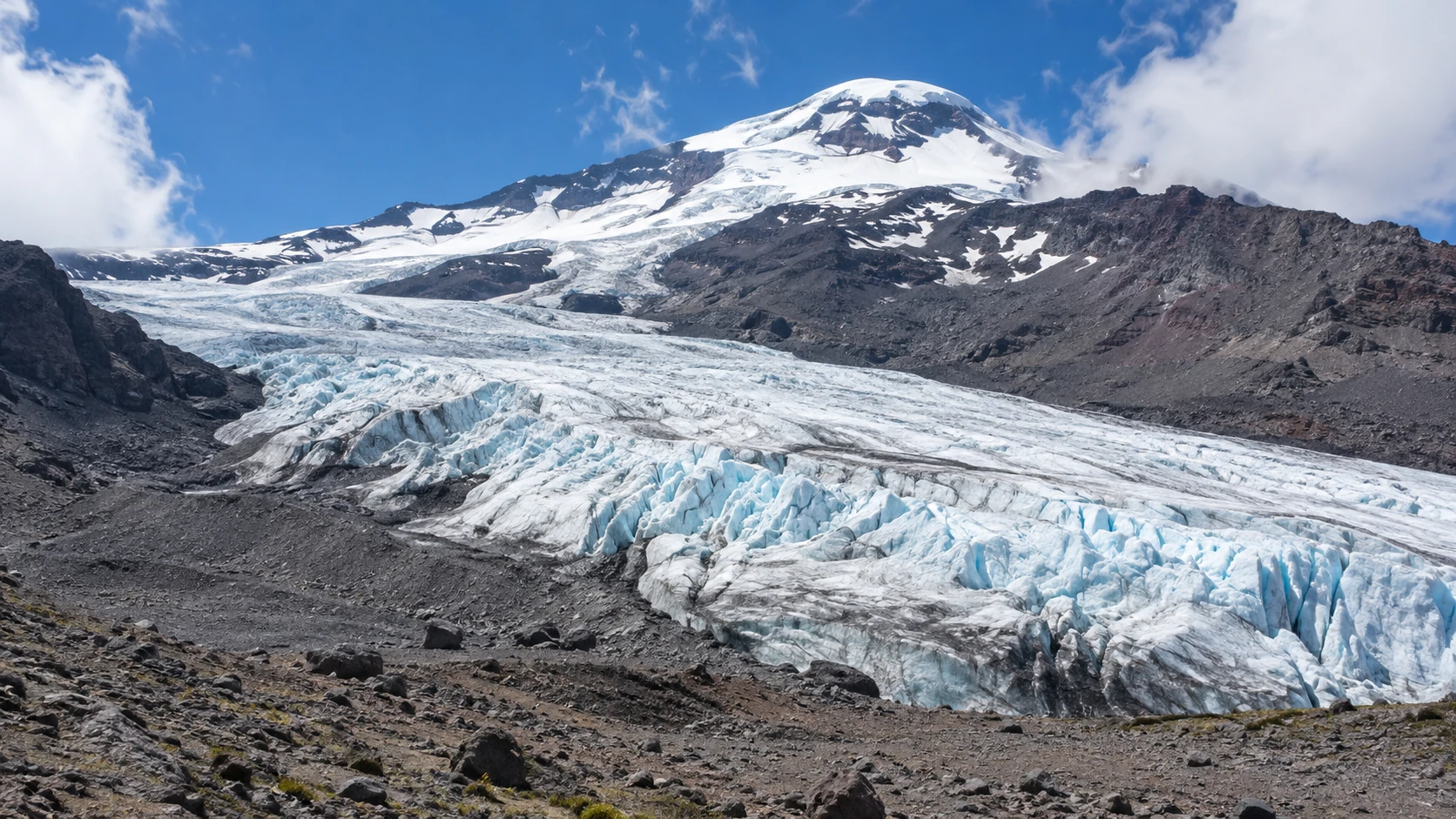
Mexican glacier faces extinction threat
The last remaining glacier in Mexico, the Jamapa Glacier, is rapidly retreating. Located on Pico de Orizaba, the highest mountain in Mexico, this glacier has seen significant ice loss over the past decade. With a reduction in thickness of up to seven meters in some areas and a total volume decrease of about 1.4 million cubic meters between 2015 and 2025, the glacier’s condition illustrates the severe impact of climate change in the region.
Why is Jamapa Glacier retreating?
The Jamapa Glacier’s rapid retreat is attributed to increasing temperatures and decreasing precipitation. Between 1990 and 2025, the temperature in the glacier’s central area rose by one degree Celsius, while annual precipitation dropped by 200 millimeters. These conditions cause a negative balance between ice accumulation and melting. This imbalance is leading to the glacier’s accelerated decline, highlighting the urgent need for climate action.
Where is Jamapa Glacier located?
The Jamapa Glacier, also known as the North Glacier, is situated on Pico de Orizaba, also known as Citlaltépetl. This mountain straddles the states of Puebla and Veracruz, reaching an elevation of 5,636 meters above sea level. Jamapa is notable for being the only remaining glacier in Mexico, as others have vanished or drastically reduced in size over recent decades.
How much has Jamapa Glacier melted?
From 2015 to 2025, the Jamapa Glacier lost around 1.4 million cubic meters of ice. Its thickness has decreased by an average of three meters, with some areas losing up to seven meters. The front of the glacier has retreated by approximately 200 meters since 2019, exposing previously ice-covered rock. This transformation is a direct reflection of climate change effects.
What are the consequences of glacier retreat?
The retreat of Jamapa Glacier impacts more than just the mountain’s appearance. The glacier plays a crucial role in the hydrological cycle, feeding springs and water courses in nearby regions. The diminishing glacier volume raises concerns about future water availability for both ecosystems and local communities that rely on these water sources.
What scientific studies are monitoring Jamapa Glacier?
Research conducted by the Center for Earth Sciences at the Universidad Veracruzana has been instrumental in understanding Jamapa Glacier’s decline. Their studies, covering 2015 to 2025, mapped the glacier’s thickness across its entire surface rather than isolated points, providing a comprehensive picture of its retreat. Continuous monitoring is essential to track future changes and impacts.
What is the future of Jamapa Glacier?
Though the Jamapa Glacier is in a terminal phase, predicting when it will disappear is complex. Climate and environmental factors play significant roles in its survival. Ongoing scientific monitoring is critical to accurately forecast its future and understand the broader implications for regional climate patterns and water resources.
How does the glacier’s decline illustrate climate change?
The Jamapa Glacier serves as a poignant example of climate change’s impact on Mexico’s high-altitude environments. Each meter of ice lost provides insight into climate transformation and its cascading effects on landscapes and ecosystems. The glacier’s retreat underscores that climate change is not just a distant problem but a tangible challenge affecting current and future generations.
Why is Jamapa Glacier’s survival significant?
Preserving Jamapa Glacier is vital not only for its environmental and hydrological roles but also for the cultural and scientific knowledge it represents. Its survival is a testament to Mexico’s natural heritage and highlights the importance of global efforts to mitigate climate impacts. Ensuring its preservation would require urgent, sustained action against environmental degradation and climate change.
The retreat of the Jamapa Glacier serves as a stark reminder of the formidable challenges climate change poses. As this singular Mexican glacier contracts, the need for proactive measures to address environmental shifts becomes ever more pressing. The glacier’s future, uncertain yet predictable, mirrors the broader climate reality facing our planet.


