
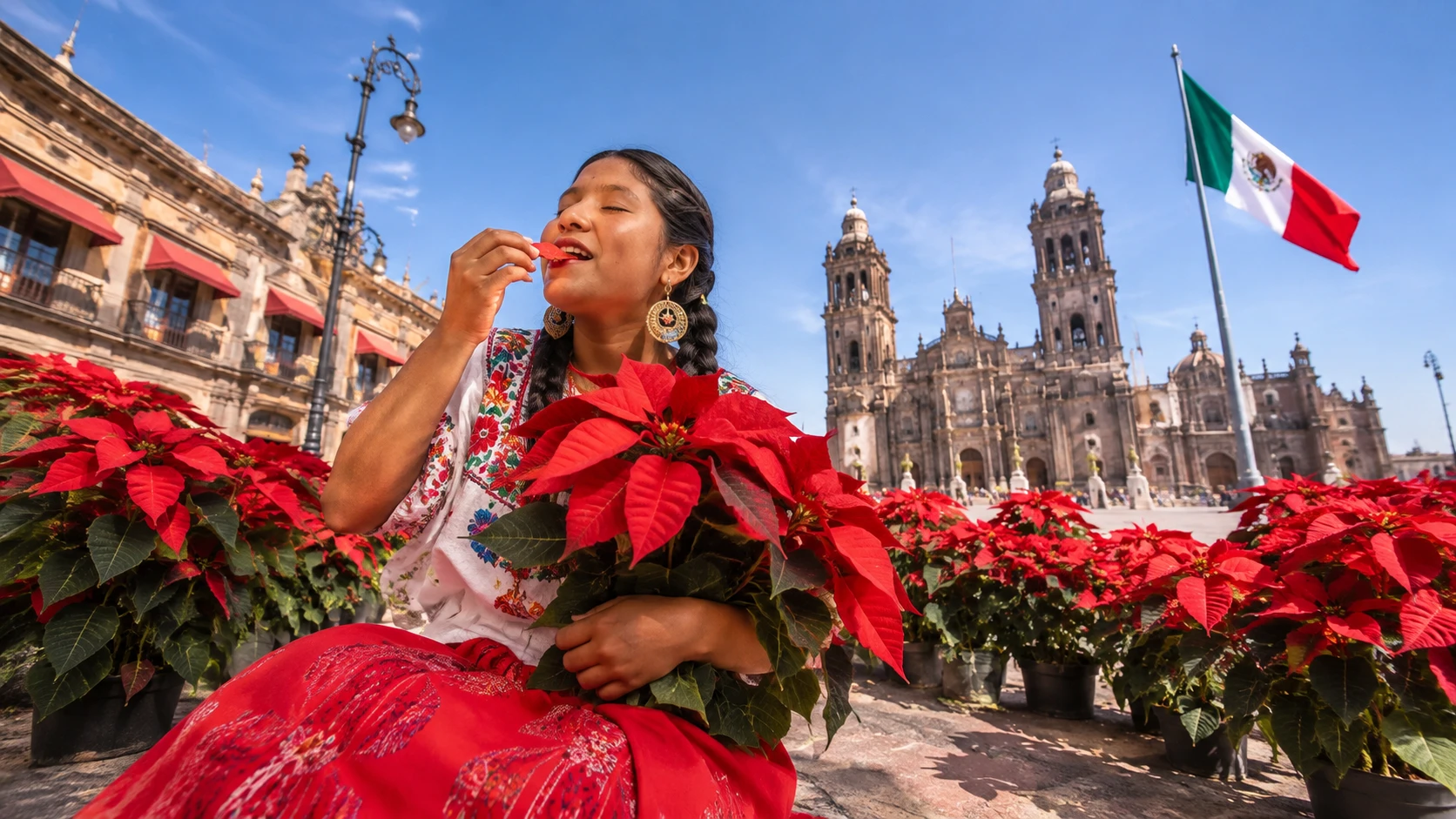
Unveiling the medicinal secrets of poinsettia
The poinsettia, known for its striking red leaves during December, has a rich medicinal history originating in Mexico. Beyond its festive appearance, this plant, also known as cuetlaxóchitl in Náhuatl, has been used for centuries by indigenous people for its therapeutic benefits. Let’s uncover how this iconic plant has served not just as a holiday decoration, but also a part of traditional medicine for treating ailments such as coughs and throat irritation.
What are the traditional medicinal uses of poinsettia?
The poinsettia, or Euphorbia pulcherrima, was traditionally used by Mexican communities to remedy respiratory issues like coughs and throat irritations. In pre-Hispanic times, it played a vital role in herbal medicine practices. The plant’s applications were well-documented, showing the indigenous people’s deep knowledge of its capabilities. While today it’s primarily seen as a decorative plant, its medicinal past highlights its importance beyond aesthetics.
How was the poinsettia traditionally prepared?
In traditional Mexican medicine, the poinsettia was used via infusions and decoctions made from various parts of the plant. These preparations were thought to help alleviate respiratory discomforts and sore throats. The practices were part of a broader tradition where plants formed the core of common ailment treatments, passed down through generations. However, caution is advised today, as there is insufficient clinical evidence to recommend such uses safely.
Is the poinsettia toxic?
Poinsettias produce a white, milky sap known as latex, which can cause skin irritation for some individuals. If it comes into contact with the eyes, it can lead to significant irritation, and ingestion may induce gastrointestinal discomfort such as nausea, vomiting, and diarrhea. While generally considered low in toxicity, poinsettias should not be consumed, especially by children and pets. It’s crucial to ensure the plant is kept out of reach to avoid accidental ingestion.
What is the historical significance of poinsettia in Mexico?
The poinsettia holds a place of reverence in Mexico’s history. Known as cuetlaxóchitl, which translates to something akin to “flower with leathery petals,” it was connected to the Mexica culture. It symbolized blood and sacrifices within their cosmic beliefs, linking life and nature’s cycles. This rich symbology helped the plant transcend its origins to become a global Christmas icon, while still retaining its cultural roots.
How did the poinsettia become a Christmas symbol?
The poinsettia’s transformation into a Christmas symbol began in the 17th century. Spanish Franciscan monks in Taxco, Guerrero, utilized the plant to decorate nativity scenes, thus initiating its association with the holiday season. From a local status symbol to an integral part of Christmas festivities worldwide, the plant’s vibrant red bracts became synonymous with holiday cheer, bridging cultures through its visual appeal.
Where is the poinsettia cultivated today?
Currently, Mexico remains a prominent producer of poinsettias, with significant cultivation in states like Morelos, Michoacán, Puebla, Jalisco, and Mexico City. Modern horticultural efforts have developed numerous varieties, expanding its color range from the traditional red to white, pink, and yellow. This broad color spectrum has helped maintain its status in both domestic and international markets, ensuring it continues to be integral to holiday decorations.
What other uses does the poinsettia have today?
Besides its historical medicinal uses and its role in Christmas traditions, the poinsettia’s beauty makes it a favorite ornamental plant worldwide. Its adaptability to various climates and environments has made it a popular choice for gardens and landscapes. Continued research aims to explore potential new uses, focusing on its aesthetic appeal and resilience, which may find it new roles in horticultural innovations.
Why is the poinsettia important culturally?
The poinsettia represents a significant cultural bridge, maintaining a rich heritage that connects modern festivities with ancient traditions. As an enduring symbol of Mexico’s botanical wealth, it serves as a living testament to the country’s historical relationship with nature. Each December, as it graces homes and public spaces globally, it reminds us of the interwoven narratives of tradition, celebration, and the continuous knowledge passed through generations.
In conclusion, while the poinsettia is primarily associated with holiday cheer today, its historical usage in traditional medicine, along with its cultural significance, highlights a multifaceted identity. It stands not just as a festive ornament but as a symbol of Mexico’s rich botanical history and enduring cultural wisdom. As we continue to celebrate with this vibrant plant, it’s crucial to remember and honor its legacy that transcends mere decoration.


