
Olmec treasures from El Manatí reunited
For the first time, a remarkable collection of Olmec artifacts discovered at El Manatí, Veracruz, will be showcased together. This exhibition, hosted at the Museum of Anthropology in Xalapa, reunites 90 striking pieces from various sites including La Merced and El Macayal. The display offers a rare glimpse into the ritual practices of the Olmec civilization, over three thousand years ago, providing a deeper understanding of this ancient culture.
What makes the El Manatí site significant?
El Manatí is unique because it wasn’t a typical city; instead, it was a sacred ritual site used over three thousand years ago. Located in Hidalgotitlán, Veracruz, about 15 kilometers southeast of San Lorenzo Tenochtitlán, the site holds an important place in Olmec history. It offers insight into the spiritual practices of the time, as evidenced by the artifacts discovered there. These discoveries have reshaped our understanding of the Olmec civilization, highlighting the complex religious ceremonies they performed.
How were the Olmec artifacts preserved?
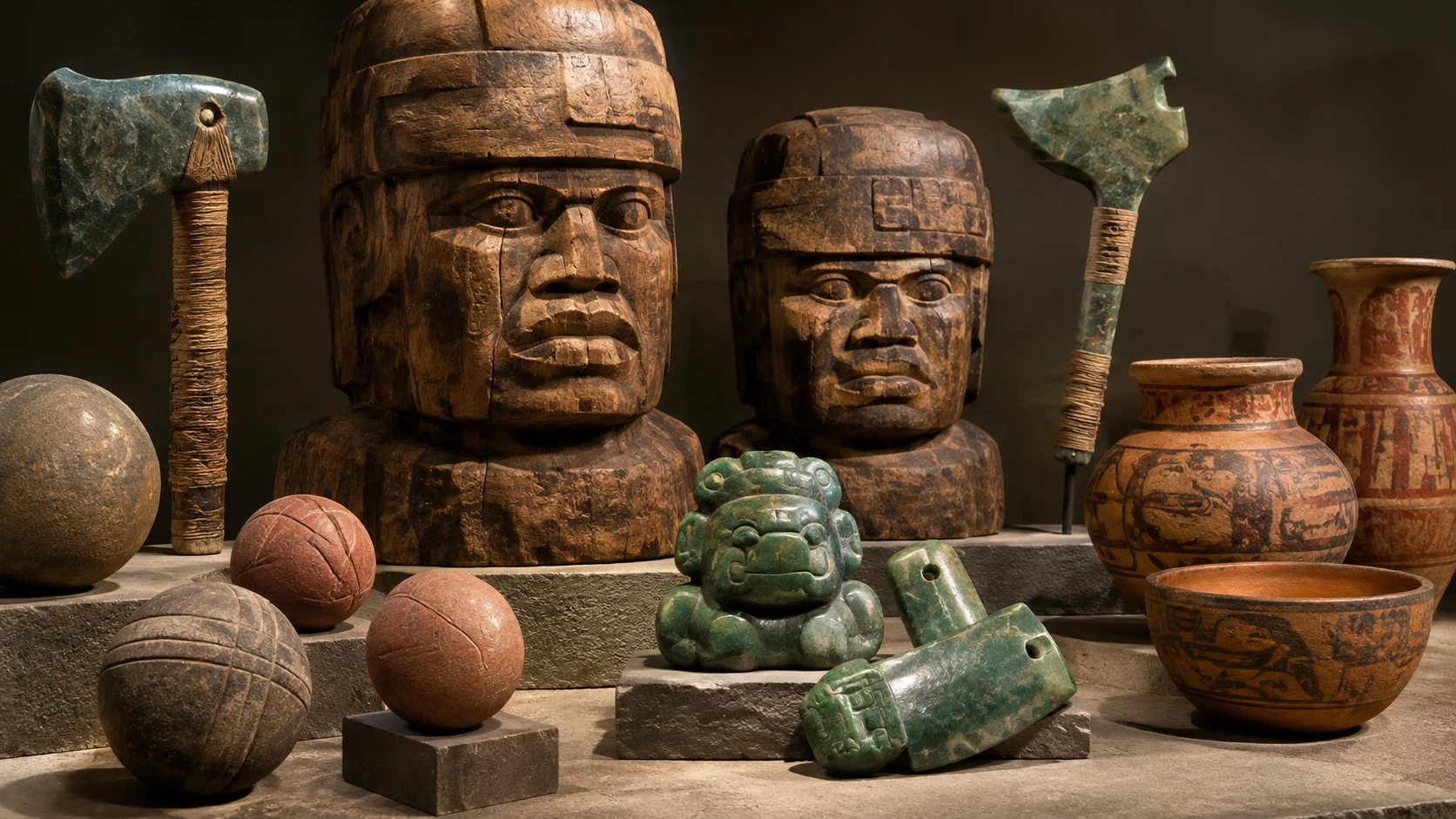
The artifacts from El Manatí were extraordinarily preserved due to the site’s wet conditions. Excavations in 1988 unearthed wooden busts, rubber balls, ceremonial axes, green stone objects, and ceramics. The site’s unique environment enabled these artifacts to remain intact, providing archaeologists with unprecedented insights. The wooden busts, among the oldest of their kind in Mexico, and the rubber balls hint at the beginnings of significant cultural practices in Mesoamerican history.
What can you see at the Museum of Anthropology in Xalapa?
The exhibition at the Museum of Anthropology in Xalapa unites 90 artifacts from El Manatí, La Merced, and El Macayal for the first time in nearly four decades. Right after the 1988 excavations, the pieces were last showcased together. Visitors can now explore these artifacts in one location, delving into different facets of Olmec ritual life, and appreciating their role in altering our comprehension of early Mesoamerican societies.
Why is the exhibition in Xalapa significant?
This exhibition in Xalapa is notable because it brings together a vast collection of artifacts that have been separated for almost 38 years. The reassembly of these pieces allows both scholars and the public to engage with the Olmec’s spiritual and cultural heritage in a comprehensive manner. It spotlights the significance of Veracruz in expanding our knowledge of ancient Mesoamerican developments, offering a broader perspective on the Olmec civilization’s contributions.
What can we learn from the Olmec rubber balls?
The Olmec rubber balls are a glimpse into early Mesoamerican ball games, which later gained substantial religious and cultural importance. These artifacts found at El Manatí suggest that such games were integral to societal rituals and possibly linked to spiritual or ceremonial events. The presence of these rubber balls at a ritual site highlights their role beyond mere entertainment, suggesting deeper spiritual implications within Olmec society.
How does El Manatí enhance our understanding of Olmec culture?
Discoveries at El Manatí greatly enhance our understanding of the Olmec culture’s spiritual complexity. The site contains offerings that indicate a rich interplay between the Olmecs and the supernatural world. These artifacts, strategically placed within the site’s natural setting, reflect the civilization’s reverence for nature in their ceremonial practices. Such insights underscore the Olmec’s cultural depth and influence in shaping later Mesoamerican traditions.
What were some unique artifacts found at El Manatí?
Among the unique items unearthed at El Manatí are anthropomorphic wooden busts and rubber balls, both of which are considered rare finds. These items, alongside ceremonial axes and green stone objects, reflect the Olmec’s artistic and ritualistic inclinations. These artifacts illuminate various aspects of Olmec life, from spiritual beliefs to social practices, providing a holistic view of their civilization.
Why is this exhibition a must-see?
This exhibition is a must-see for anyone interested in Mesoamerican history due to its unprecedented gathering of significant Olmec artifacts. It offers an unparalleled opportunity to witness objects that have previously been displayed separately, enriching our understanding of early cultural practices and spiritual lives in the region. More than three millennia after these offerings were first placed in El Manatí, visitors can now engage with these relics firsthand, gaining insights into their historical and cultural significance.
In conclusion, the reunion of the Olmec artifacts from El Manatí at the Museum of Anthropology in Xalapa is a noteworthy event. It not only revives interest in these ancient treasures but also deepens our comprehension of the Olmec civilization’s religious and cultural dynamics. This exhibit offers a rare chance to explore the intricate tapestry of Mesoamerican history, shedding light on a civilization that significantly shaped the ancient world.


