
Xoloitzcuintli: The Ancient Mexican Dog Behind Dante in Coco
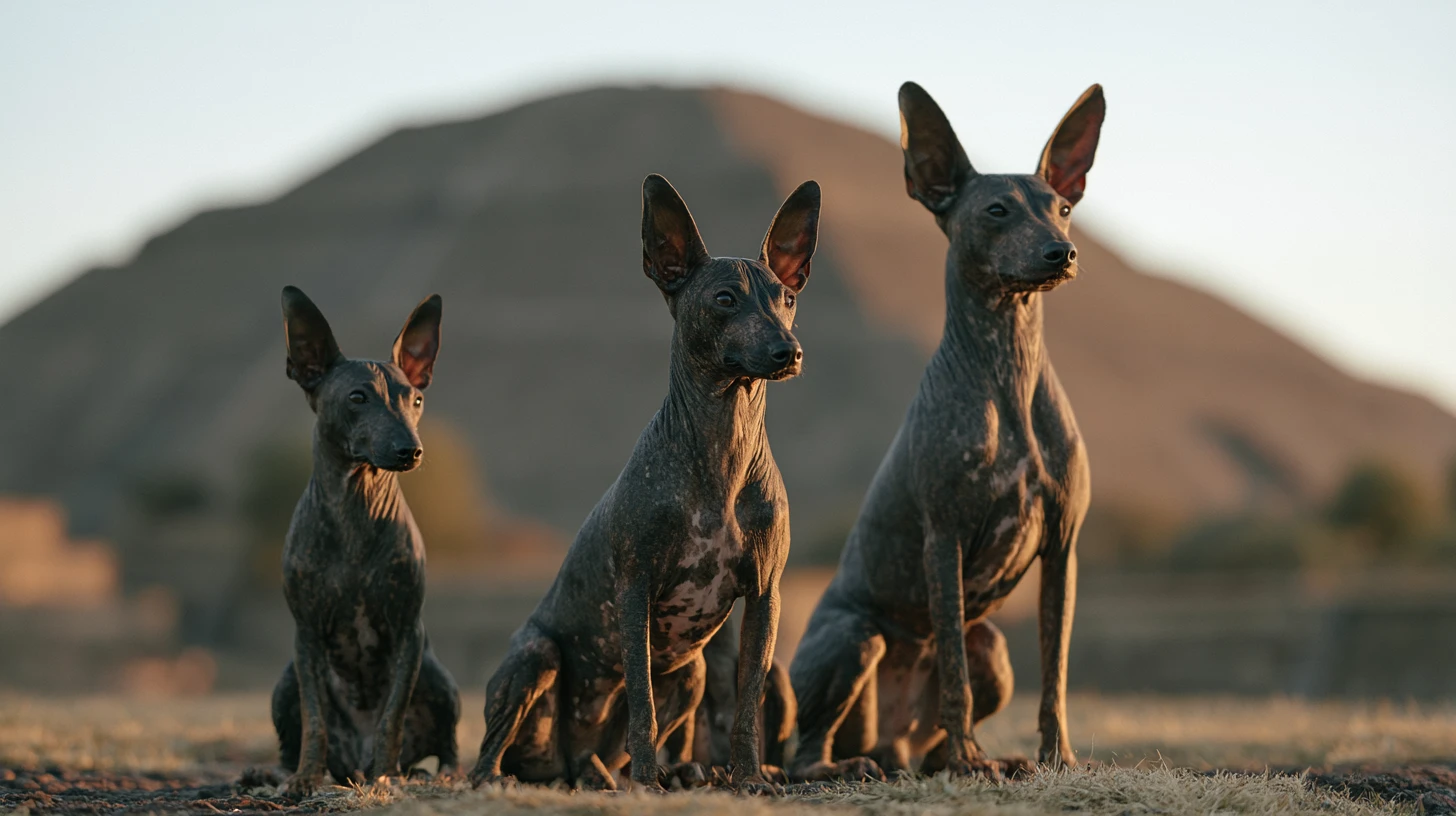
The Xoloitzcuintli, commonly known as the Xolo or Mexican Hairless Dog, is one of the world’s oldest and most distinctive dog breeds. With a history stretching back thousands of years, the Xoloitzcuintli is deeply connected to the cultures and traditions of ancient Mexico. Today, the breed is recognized as Mexico’s national dog and is admired for its unusual appearance, intelligence, loyalty, and calm temperament.
The Xoloitzcuintli has also become familiar to a much wider international audience thanks to popular culture. Movie fans may recognize the breed as Dante, Miguel’s loyal and mischievous companion in Pixar’s Coco. Pixar identifies Dante specifically as a Xoloitzcuintli and describes him as a nearly hairless Xolo with missing teeth and a close relationship with Miguel.
What Is a Xoloitzcuintli?
The Xoloitzcuintli is an ancient Mexican breed whose name is generally associated with Xolotl, an Aztec god connected with fire and lightning, and itzcuintli, the Nahuatl word for dog. The American Kennel Club describes the Xolo as a breed dating back approximately 3,000 years.
The breed is best known for its hairless appearance, although not every Xolo is hairless. There are actually two coat varieties: hairless and coated. Hairless Xolos usually have smooth, relatively tough skin and may have small amounts of coarse hair on the head, feet, or tail. Coated Xolos have a short, close-fitting coat. Both varieties are considered part of the same breed.
Three Xoloitzcuintli Size Variations
One of the most interesting things about the Xoloitzcuintli is that the breed comes in three distinct size variations: Toy, Miniature, and Standard. This means that Xolos can range from a relatively small companion dog to a substantially larger family guardian.
According to the Xoloitzcuintli Club of America, the Toy Xolo measures approximately 10 to 14 inches at the shoulder, the Miniature Xolo measures 14 to 18 inches, and the Standard Xolo measures 18 to 23 inches.
The American Kennel Club likewise recognizes the three sizes and notes that the breed is available in both hairless and coated forms.
This three-size structure makes the Xoloitzcuintli unusually versatile. A Toy may be well suited to someone looking for a smaller companion, while a Standard Xolo has the size and presence of a substantial watchdog. Despite the differences in size, all three share the breed’s characteristic athletic build and attentive nature.
The Xoloitzcuintli’s Ancient Mexican History
The Xoloitzcuintli has a remarkable connection to ancient Mexico. Archaeological evidence and historical accounts indicate that dogs resembling today’s Xolo existed in the region thousands of years ago. The breed was valued by ancient Mexican civilizations and acquired religious and spiritual significance.
The name’s association with Xolotl reflects the important place dogs held in pre-Columbian belief systems. Xoloitzcuintli dogs were traditionally associated with the journey of the dead to the afterlife. In particular, ancient Mexican traditions held that dogs could help guide souls on their journey toward Mictlán.
This spiritual connection is one reason the Xoloitzcuintli is much more than an unusual-looking dog. It represents an enduring link between contemporary Mexico and its pre-Columbian heritage.
Xoloitzcuintli and Frida Kahlo
The breed’s cultural importance continued into modern Mexican history, particularly through the work and personal life of Frida Kahlo.
Kahlo and her husband, Mexican muralist Diego Rivera, were known for their affection for Xoloitzcuintli dogs. The breed appeared in their artistic and photographic worlds, helping reinforce the Xolo’s association with Mexican identity and indigenous heritage. The American Kennel Club notes that both Kahlo and Rivera helped bring renewed attention to these ancient Mexican dogs during the 20th century.
The Xolo was especially fitting within Kahlo’s artistic universe. Her work frequently explored Mexican identity, indigenous traditions, death, spirituality, and the relationship between the ancient and modern worlds. The Xoloitzcuintli embodied many of those same themes.
Today, photographs and paintings featuring Kahlo alongside Xolos are among the most recognizable modern representations of the breed.
Dante in Pixar’s Coco
For many people outside Mexico, their first encounter with a Xoloitzcuintli may have been through Dante in Pixar’s Coco.
Dante is Miguel’s loyal dog and is explicitly identified by Pixar as a Xoloitzcuintli. His appearance reflects several real characteristics of the breed, including his mostly hairless body and missing teeth.
Disney has also explained that Pixar animators studied real Xoloitzcuintli dogs while developing Dante. The character therefore isn’t simply a generic cartoon dog: his design was deliberately based on the physical characteristics of the Mexican breed.
Dante’s role in Coco is particularly meaningful because the film explores Mexican culture, family traditions, Día de los Muertos, memory, and the relationship between the living and the dead—all themes that resonate strongly with the Xoloitzcuintli’s ancient cultural history.
Temperament and Appearance
Modern Xoloitzcuintli dogs are generally described as intelligent, alert, loyal, and attentive. The breed can be reserved around strangers but often forms strong bonds with its family. The Xoloitzcuintli Club of America describes the breed as a working-type dog that should not be timid or aggressive.
Physically, Xolos have a lean, muscular appearance with long legs, prominent ears, and an elegant silhouette. Their skin can occur in a range of colors, while coated Xolos have a short, sleek coat.
Hairless Xolos also have some distinctive dental characteristics. Incomplete dentition is common in the hairless variety, which helps explain why a Xolo such as Dante can have a characteristic tongue-hanging expression.
Caring for a Xoloitzcuintli
The hairless Xolo’s lack of a conventional coat means owners need to pay particular attention to its skin. Protection from excessive sun exposure and cold weather can be important, and the dog’s skin should be kept clean without excessive bathing.
Despite their exotic appearance, Xolos are not simply ornamental pets. They are intelligent, active dogs that benefit from regular exercise, training, socialization, and companionship. Their moderate exercise requirements make them adaptable to different households, provided their physical and mental needs are met.
Why the Xoloitzcuintli Is So Special
The Xoloitzcuintli is remarkable because its story crosses thousands of years of Mexican history. It has been associated with ancient religious traditions, survived periods of declining popularity, appeared alongside major Mexican artists such as Frida Kahlo, and reached a worldwide audience as Dante in Pixar’s Coco.
Its three size variations—Toy, Miniature, and Standard—and two coat varieties—hairless and coated—also make it a particularly versatile breed.
Ultimately, the Xoloitzcuintli is much more than the “Mexican hairless dog.” It is a living part of Mexico’s cultural heritage and one of the most fascinating examples of how a dog breed can remain connected to a country’s history, art, mythology, and modern identity. From ancient Mexican traditions to Frida Kahlo‘s paintings and Dante’s adventures in Coco, the Xolo continues to capture people’s imagination while preserving a remarkable piece of the past.


