
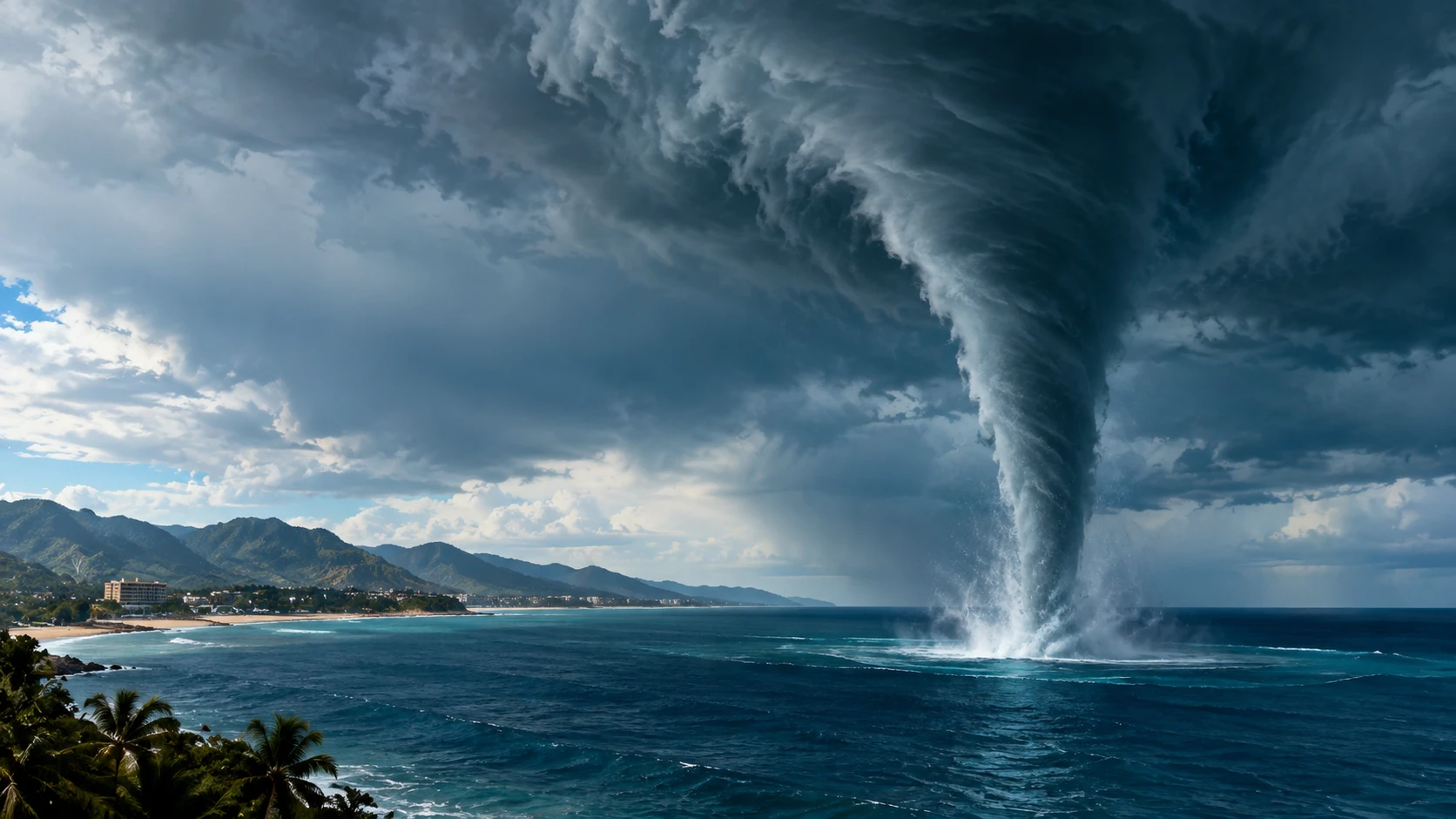
Atlantic hurricane absence in October noted by UNAM
The Atlantic Ocean has reached October 2026 without a single hurricane, an unusual occurrence that has drawn attention from meteorologists and researchers worldwide. Despite eight tropical storms being recorded, none have escalated to hurricane status, marking a significant deviation from typical patterns. This absence is particularly curious given that August, September, and October usually witness heightened cyclonic activity. Researchers, including Christian Domínguez Sarmiento from UNAM’s Institute of Atmospheric Sciences and Climate Change, attribute this phenomenon to a blend of diverse atmospheric and oceanographic factors, such as the influence of El Niño and the Quasi-Biennial Oscillation. While this lull doesn’t imply total safety for coastal areas, it highlights the complexities of climatic conditions that govern hurricane formation.
Why are there no hurricanes in October 2026?
As of October 2026, the Atlantic has not seen any hurricanes, which is considered highly unusual. Historically, this is the time when cyclone activity peaks. The 2026 hurricane season officially runs from June 1 to November 30. However, all named storms—Arthur, Bertha, Cristóbal, Dolly, Edouard, Fay, Gonzalo, and Hanna—remained below hurricane intensity. This situation marks the latest start to a hurricane season since modern satellite observations began in the 1960s. Previous instances, such as Hurricane Gustav in 2002 and Humberto in 2013, saw formations by early September.
What conditions are preventing hurricane formation?
The lack of hurricanes is not due to an inability of the ocean to generate storms but rather the prevailing atmospheric conditions. For a tropical cyclone to develop, several factors must align: warm sea surface temperatures (usually around 26.5 °C or higher), sufficient moisture, and stable winds. The winds’ stability can be disrupted by high vertical wind shear, which can prevent storms from organizing and gaining strength to become hurricanes. Even with favorable ocean temperatures, these atmospheric conditions have not allowed for hurricane formation so far in 2026.
How does El Niño affect hurricane activity?
El Niño exerts a significant influence by altering atmospheric circulation patterns, particularly enhancing vertical wind shear in certain regions of the Atlantic. This shear disrupts cyclone formation, preventing their consolidation into hurricanes. The impact is notable for areas like the Gulf of Mexico and the Caribbean, where changes in atmospheric conditions reduce the likelihood of cyclone development. El Niño does not act uniformly across the entire basin, and while influential, it is not the sole factor responsible for the lack of hurricanes in 2026.
Role of the Quasi-Biennial Oscillation
The Quasi-Biennial Oscillation (QBO), a natural stratospheric wind pattern, also plays a role. It switches between easterly and westerly phases every 24 to 30 months, impacting tropical atmospheric circulation. The current interaction between QBO and El Niño appears to have created conditions unfavorable for cyclone strengthening. The QBO’s influence on this year’s low hurricane activity underscores the complex interplay of atmospheric phenomena affecting cyclonic systems.
Are Mexican coasts safe from storms?
While there have been no hurricanes, the absence does not ensure safety for Mexican regions. Tropical storms, regardless of their hurricane status, can cause significant destruction. Heavy rains might lead to flooding, river overflow, and landslides. Coastal areas, especially those near the Gulf of Mexico and the Caribbean, remain vulnerable to high wind speeds, waves, and storm surges. Monitoring meteorological advisories remains crucial, as tropical storms can still pose considerable risks.
Is hurricane formation possible in the remaining season?
The potential for hurricane development in October and November 2026 persists. As long as the season lasts, which concludes on November 30, atmospheric conditions might change to favor hurricane formation. If factors like vertical wind shear reduce and other necessary conditions align, a tropical storm could evolve into a hurricane. In historical context, years such as 1907 and 1914 went without hurricanes, though the records from that era are less complete. This year’s calm highlights the intricate balance between oceanic temperatures, moisture levels, and atmospheric conditions necessary for hurricane formation.
Historical perspective on the 2026 season
The 2026 hurricane season could be historically significant if no hurricanes form by its conclusion. Such an anomaly would further emphasize the importance of understanding climate variability. Previous hurricane-free years, like 1907 and 1914, are some of the rare instances without hurricanes, although pre-satellite records are limited. The unexpected calm of 2026 serves as a reminder of the complex and unpredictable nature of oceanic behavior. As the season continues, ongoing vigilance remains essential to mitigate potential impacts.
Conclusion
The absence of hurricanes in the Atlantic as of October 2026 has drawn significant attention from climate scientists and meteorologists. Factors including El Niño and the Quasi-Biennial Oscillation have contributed to this exceptional situation. Despite the current calm, the potential for storm formation remains as the season is not yet over. Vigilance and preparedness are essential, particularly in coastal regions, to mitigate the impact of any future cyclonic activity. Understanding these climatic anomalies is crucial for predicting future hurricane seasons and taking proactive measures.


