
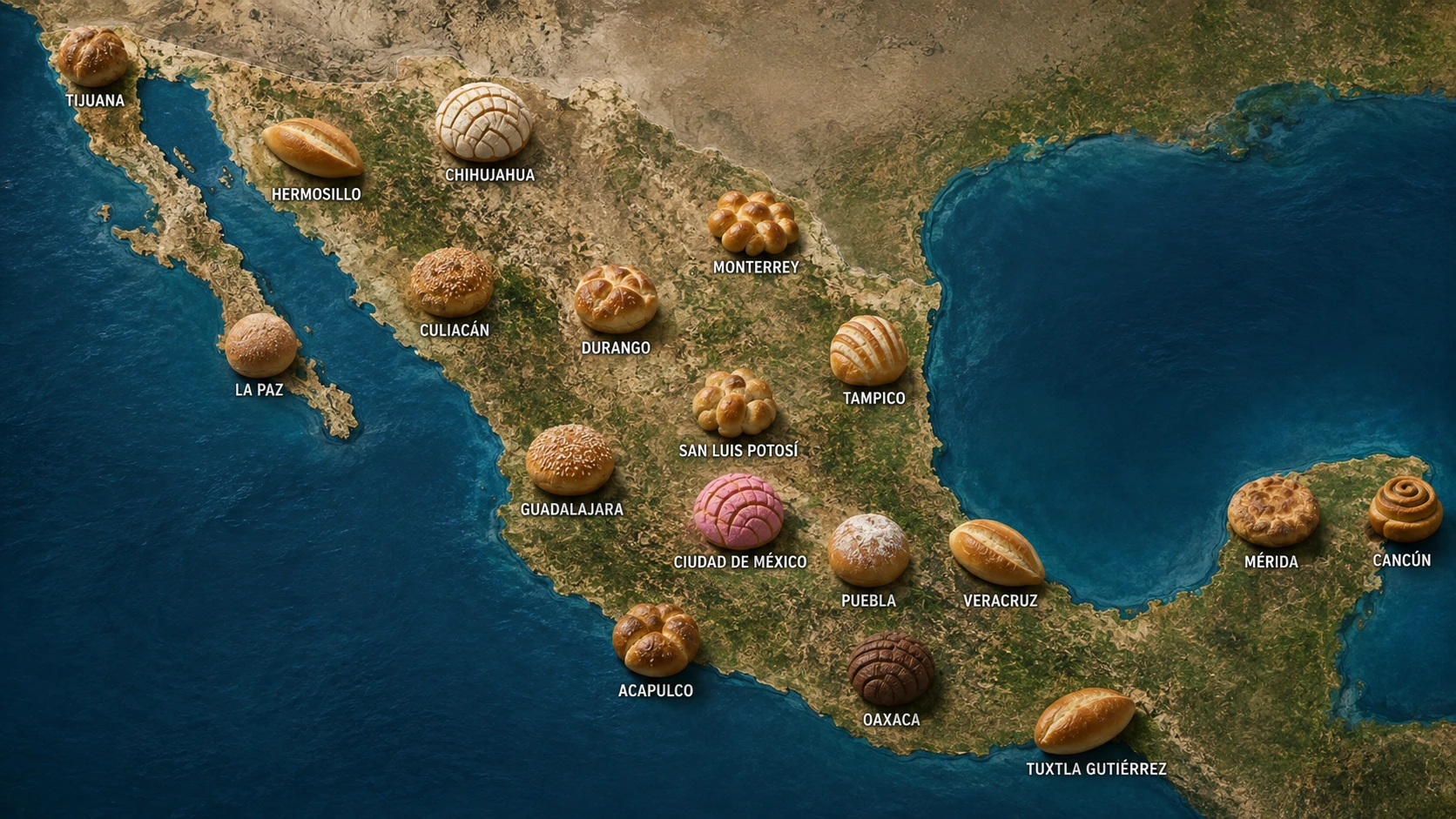
Exploring the new Mexican bread map
The Mexican culinary world is rich with tradition, especially when it comes to bread. A new tool now allows enthusiasts to explore this cultural legacy more comprehensively: the first Mexican Bread Map. This guide presents 52 traditional types of bread, detailing their origins and how they’re made. This innovative approach goes beyond state or popularity rankings, focusing instead on explaining the relationships between seemingly different breads that share the same foundational dough. This venture offers a fresh perspective on the diversity of Mexican bread.
What is the Mexican bread map?
The Mexican Bread Map is an educational tool that catalogs 52 varieties of traditional Mexican bread. It organizes these breads based on the type of dough used in their preparation. This approach allows users to understand how different breads are related beyond their appearance or regional popularity. This map is the first of its kind, providing a systematic overview of the country’s bread diversity.
Why was the Mexican bread map created?
The map was created to address the challenge of classifying Mexican bread, which has always been difficult due to its wide variety. Traditional breads can vary significantly even within the same region, often depending on small changes in ingredients or names. The map aims to offer a clearer understanding by focusing on the basic dough types rather than superficial characteristics.
How were the 52 breads selected?
The selection of the 52 breads was guided by their traditional significance and the complexity of their preparation methods. Experts sought to include a wide range that showcased the cultural and historical richness of Mexican baking. Each selected bread piece plays a role in local traditions and fiestas, emphasizing their cultural importance across various regions of Mexico.
What types of breads are included in the map?
The map includes both sweet and savory breads. Examples of such breads are ‘conchas,’ which are known for their sweet, crunchy topping, and ‘bolillos,’ a staple of Mexican meals. Each bread type reflects centuries of local traditions that are passed down through generations by Mexican bakers, forming a central component of both daily meals and special celebrations.
How does the map help in understanding bread variations?
The bread map provides insights into how breads that look and taste different can actually share the same dough base. For instance, subtle ingredient changes can create unique flavor profiles. This educational aspect enables a deeper appreciation of Mexican bread-making techniques and highlights the skill and creativity involved in traditional breadmaking.
Are there regional differences in the breads?
Yes, many breads have significant regional variations. For example, a type of bread might change its name or ingredients slightly in different cities. This map helps highlight these regional variations while showing the commonalities in fundamental dough preparation. This insight can spark interest in exploring further regional culinary practices within Mexico.
What’s the cultural impact of the Mexican bread map?
The Mexican Bread Map serves as a cultural bridge, connecting people with the rich culinary heritage of Mexico. By understanding the common roots of different breads, individuals can appreciate the craftsmanship involved. This map not only preserves culinary traditions but also promotes them, potentially inspiring new generations of bakers and food enthusiasts.
Future implications for Mexican baking traditions
This map could pave the way for more detailed studies and tools that explore Mexican culinary arts. As it gains attention, it might encourage similar projects in other food categories, fostering a deeper understanding of Mexican gastronomy. It reflects an ongoing effort to preserve and celebrate the diversity of Mexican culture through its myriad food traditions.
Conclusively, the Mexican Bread Map is a pioneering effort that highlights the depth and diversity of traditional baking in Mexico. It provides valuable insights not just for bakers, but for anyone interested in cultural culinary studies. As it continues to gain recognition, it may encourage more comprehensive explorations into other facets of Mexican cuisine.


