
🌵 Peyote: history, effects, cultural meaning, and legal status
What is Peyote?
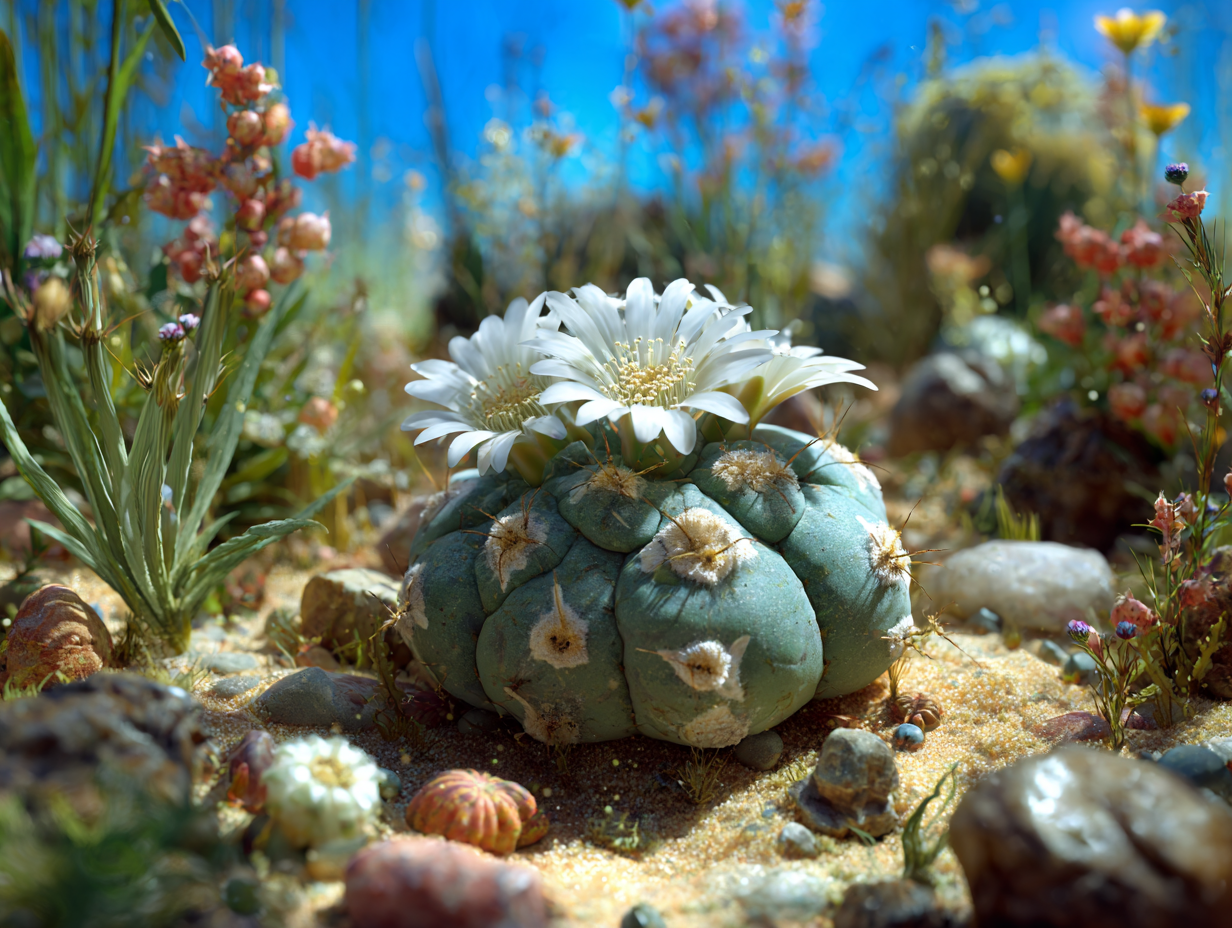
Peyote (Lophophora williamsii) is a small, spineless psychoactive cactus native to the Chihuahuan Desert of northern Mexico and southern Texas. The plant contains mescaline, a naturally occurring hallucinogenic compound that alters perception, mood, and consciousness.
The top of the cactus forms rounded disc-shaped structures known as “peyote buttons.” These buttons contain the highest concentration of mescaline and are traditionally consumed during spiritual ceremonies.
For thousands of years, peyote has been regarded as sacred medicine by Indigenous peoples of North America. Rather than recreational use, it is traditionally associated with prayer, healing rituals, and spiritual insight.
History of Peyote use
Archaeological evidence suggests human use of this plant dates back more than 5,000 years. Indigenous communities across northern Mexico and the southwestern United States integrated the cactus into religious practices long before modern pharmacology identified mescaline as its active compound.
The Wixárika (Huichol) people of Mexico consider the plant a central element of their cosmology. Annual pilgrimages to the sacred desert region of Wirikuta allow participants to gather peyote as part of ceremonial traditions connecting them with ancestors and divine forces.
In the United States, peyote later became the primary sacrament of the Native American Church, where it continues to be used in all-night healing ceremonies focused on spiritual reflection, community unity, and personal transformation.
Today, conservation efforts aim to protect wild peyote populations threatened by habitat loss and overharvesting.
Effects on the body
After ingestion, peyote produces both physical and neurological responses. The onset typically begins with strong physiological sensations.
Common physical effects include:
- Nausea and vomiting
- Dilated pupils
- Increased heart rate
- Elevated blood pressure
- Increased body temperature and perspiration
- Headaches and muscle weakness
- Impaired coordination
These reactions vary depending on dosage, health condition, and environmental setting. The initial nausea is often interpreted in ceremonial contexts as physical purification.
Effects on the mind
Mescaline primarily influences perception and cognition. The psychoactive experience may last between 10 and 12 hours.
Psychological effects may include:
- Visual and auditory hallucinations
- Altered perception of time and space
- Intensified colors and geometric patterns
- Changes in body awareness
- Emotional openness and introspection
Many users describe feelings of euphoria or spiritual insight, although anxiety or confusion can also occur, especially outside ceremonial settings.
Other hallucinogens that produce similar effects include LSD, psilocybin mushrooms, and PCP.
Legal status
Under the United States Controlled Substances Act, peyote and mescaline are classified as Schedule I substances, indicating a high potential for abuse and no currently accepted medical use under federal law.
However, federal exemptions permit ceremonial use of peyote by recognized Native American religious groups.
❓ Frequently Asked Questions
Is peyote legal in the United States?
Peyote is classified as a Schedule I controlled substance, but federal law allows ceremonial use within recognized Native American religious practices.
How is peyote consumed?
Peyote buttons may be chewed, brewed into tea, dried and powdered into capsules, or occasionally smoked with plant material.
How long do peyote effects last?
The psychoactive experience typically lasts 10–12 hours, depending on dosage and individual sensitivity.
Is peyote addictive?
Peyote does not generally cause physical dependence, although psychological dependence is possible.
Why is peyote considered sacred?
Indigenous cultures view peyote as a spiritual medicine used for healing, prayer, and connection with the divine.


